
Last updated November 24, 2026
 Sweep & inspection
 Caps & crowns
 Flue relining
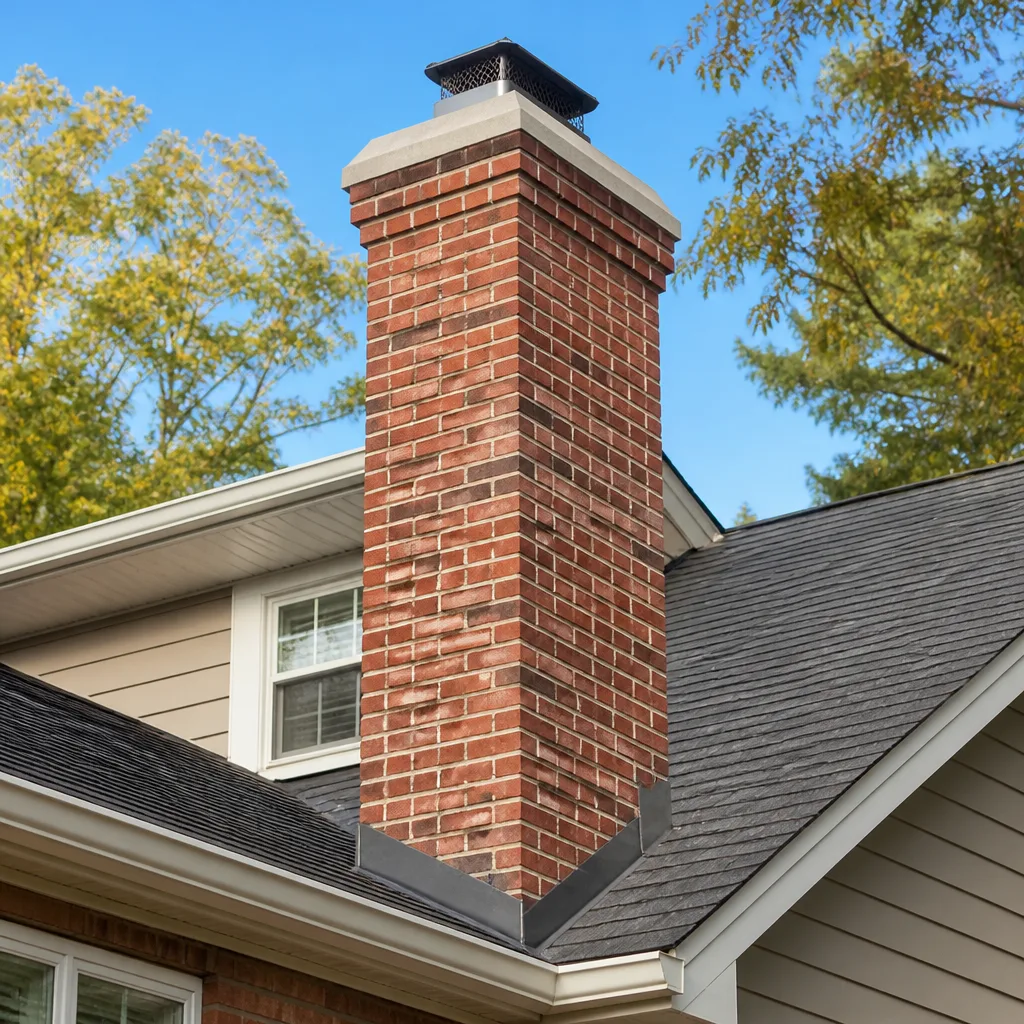 Masonry repair
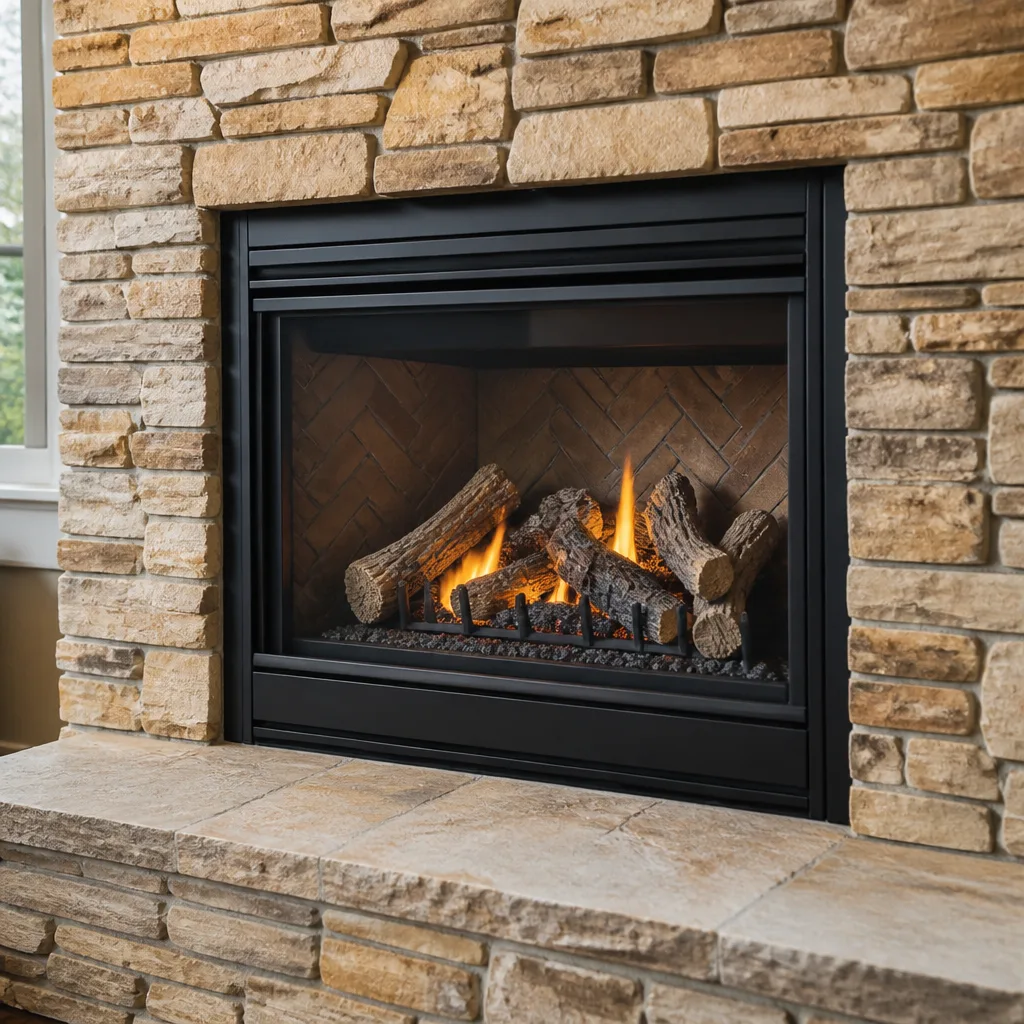 Gas fireplace service
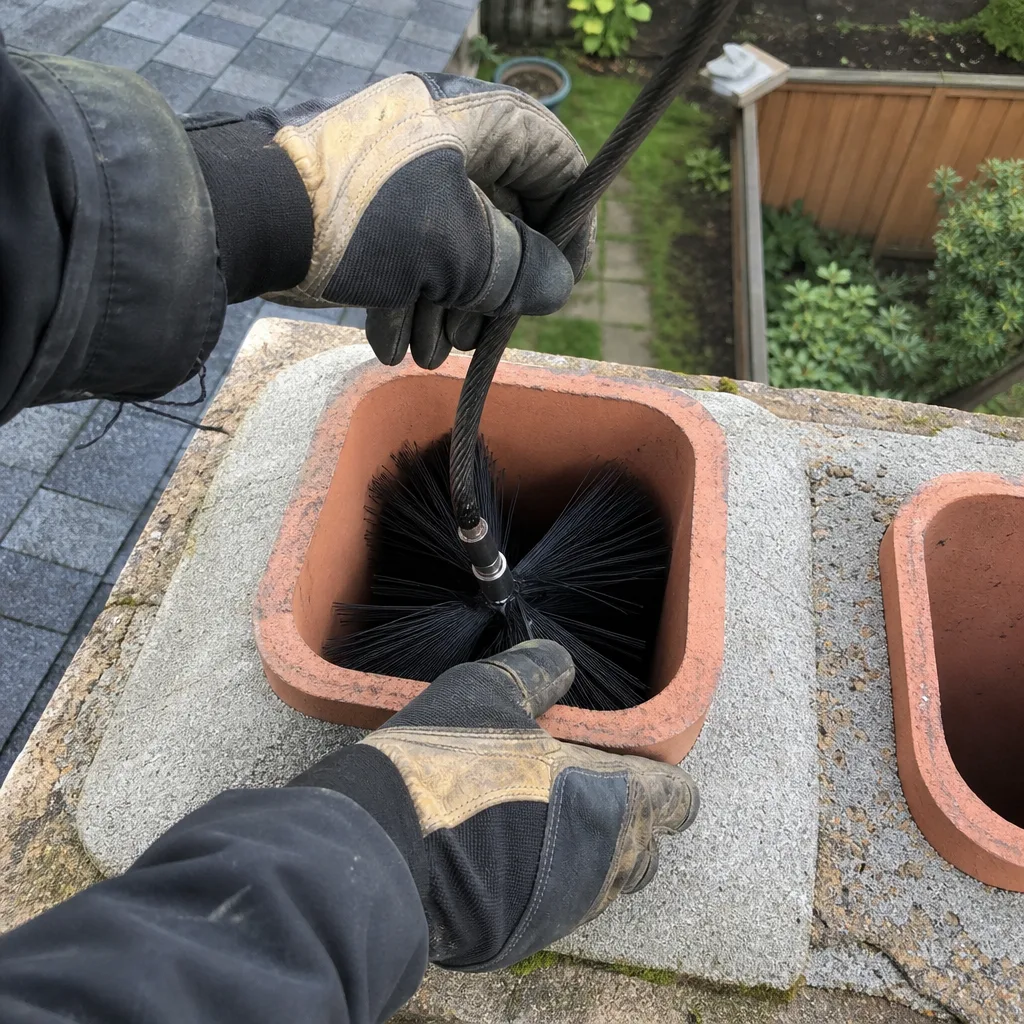
Level 1 sweep and inspection to the NFPA 211 annual standard - flue, crown, cap, and flashing checked and photographed
Chimney sweep logs do not sweep chimneys. They loosen some creosote - which then falls where a brush and vacuum still have to collect it.
Chimney Cleaning Emergency Preparedness Guide for Tacoma Homes
A chimney fire produces a roaring sound, intense heat, and sometimes visible flame from the top of the flue. The first instinct most homeowners have, opening the damper to “let it out,” is exactly the wrong move. It feeds the fire more oxygen and can push flame and smoke further into the chimney system. What you do in the first few minutes matters more than almost anything that follows. This guide covers how to recognize a real chimney emergency, what to do in the first ten minutes, how to prepare your Tacoma home beforehand, and what comes after. It’s a plan you build before you need it, not a list you read while your flue is roaring.
Quick Answer
If you suspect a chimney fire, close the damper, get everyone out of the house, and call 911 from outside. Don’t try to put it out with water, and don’t open the firebox door. Once the fire department clears the structure, a Level 2 inspection is required before you use the fireplace again. Carbon monoxide events work differently: get fresh air, leave the building, and call 911 if anyone shows symptoms. Preparation before any of this happens is what keeps a scary moment from becoming a disaster.
Styles & brands we work with
- Sweep & inspection
- Caps & crowns
- Flue relining
- Masonry repair
- Gas fireplace service
Table of Contents
- How Do You Tell a Chimney Fire From a Normal Fire?
- The First Ten Minutes of a Chimney Fire: A Step-by-Step Plan
- Carbon Monoxide Preparedness for Gas Inserts and Older Appliances
- What to Tell the Fire Department When They Arrive
- After a Chimney Fire: The Level 2 Inspection and What It Looks For
- Pre-Season Preparation for Tacoma Homes
- Burning Habits That Prevent Most Emergencies
How Do You Tell a Chimney Fire From a Normal Fire?
A normal fire in a firebox is noisy in a contained way: crackling, popping, a low whoosh when you first light it. A chimney fire sounds different, and it plays out up inside the flue where you can’t see it directly. In our experience, the sound is the first thing homeowners notice, often before they see anything. Knowing the difference decides whether you close the damper and call 911 or just add another log.
Here’s what to listen and look for:
- A loud roaring or rumbling sound, like a freight train or low-flying jet, coming from the chimney rather than the firebox. This is the single most reported sign.
- A rapid ticking or popping that continues when the fire below is settled and quiet.
- Intense heat radiating from the chimney itself, the wall behind it, or the stovepipe. A normal fire warms the room gradually; a chimney fire heats the surrounding surfaces fast.
- Flames or sparks visible at the top of the flue, seen from outside. This can look like a blowtorch coming out of the chimney cap.
- Dense, dark smoke from the top of the chimney, or smoke backing into the room despite an open damper.
- A strong, hot, tar-like smell drifting into the house, distinct from the usual wood smoke.
Compare that to plain noisy combustion. A firebox gives you localized crackling and an occasional pop, but the chimney top shows only a thin, steady drift of smoke. If your fireplace sounds louder than it normally does and the noise seems to be coming from inside the wall or up in the flue rather than the firebox, treat it as a chimney fire until a professional tells you otherwise. A sweep and an inspection can tell you with certainty. For routine cleaning that keeps creosote from building to the ignition point in the first place, our chimney sweep service is the starting point.
Tacoma homes burn a mix of seasoned fir, alder, and sometimes mill scrap, and the wetter our winters run, the more creosote that mix can leave behind. Creosote is what actually fuels a chimney fire. It deposits on the flue walls as a crusty, glazed, or flaky layer, and once it’s thick enough and hot enough, it lights. The best way to tell a normal fire from a chimney fire is to know your flue’s condition before you burn. That’s what an inspection gives you.
The First Ten Minutes of a Chimney Fire: A Step-by-Step Plan
If you believe your chimney is on fire, act in this order. Print this list and keep it where you can find it without searching. In the moment, you won’t remember anything you haven’t rehearsed.
- Close the damper and the firebox door. Starve the fire of oxygen. This is the opposite of what instinct tells you, but an open damper feeds the flames and can push them harder up the flue.
- Get everyone out of the house. Take the kids, the pets, and your phone. Don’t stop to grab belongings. Once you’re out, stay out.
- Call 911 from outside. Tell the dispatcher you have a chimney fire. Give the address clearly, and don’t hang up until they tell you to.
- If time and safety allow, wet the roof around the chimney from the ground using a garden hose, not by climbing up. Never get on the roof during a chimney fire. The chimney may be structurally compromised, and the heat is dangerous.
- Position your family at the meeting spot you’ve set as part of your home emergency plan, and account for everyone. Make sure one adult stays with the group and doesn’t re-enter.
- Watch for extension into the house. From outside, look at the roof line, eaves, and attic vents for smoke or flame. Report anything you see to the fire department when they arrive.
- Don’t re-enter the house for any reason until the fire department says it’s safe. Chimney fires can extend into framing or attic spaces without obvious flame in the firebox.
What not to do matters just as much. Don’t throw water on the fire in the firebox; it can flash to steam and spread fire out into the room. Don’t open the firebox door to “check.” Don’t try to climb up and inspect the flue yourself. Don’t wait to see whether it “settles down.” A chimney fire that goes untreated for several minutes can crack a clay tile liner, warp a metal one, or bridge into a wood-framed chase.
Then comes the hard part: the wait. Once the fire department has knocked down any extension and checked the structure, your work is done for the night. The Tacoma Chimney Sweep team can walk you through what a post-fire assessment needs to include, but no one should re-light that fireplace before a proper inspection. That’s the next section.
Carbon Monoxide Preparedness for Gas Inserts and Older Appliances
Carbon monoxide is a different kind of chimney emergency. It’s colorless, odorless, and it doesn’t announce itself with a roar. In Tacoma, it can come from a gas fireplace insert, a wood stove with a blocked or reverse-drafting flue, or an older oil appliance still venting through the chimney. A chimney at the heart of any of those systems can fail quietly and let CO build up in the living space before anyone realizes there’s a problem.
Here’s the preparation plan that matters most:
- Place CO alarms where they’ll wake you. One on each level of the home, one outside each sleeping area, and one near the appliance itself. Alarms should be mounted on a wall or ceiling, not in a closet or dead-air corner. Test them monthly and change batteries when you change your smoke alarm batteries.
- Know the symptoms. Headache, dizziness, nausea, fatigue, confusion, and shortness of breath. The tricky part is that low-level exposure feels like the flu. If multiple people in the house feel the same symptoms, and they ease when they leave and return when they come back, suspect CO immediately.
- React fast. If an alarm sounds, get everyone outside and call 911. Don’t open windows and wait for the alarm to stop. That’s a false sense of safety.
- Ventilation actions. If you suspect CO without an alarm and feel symptoms, open windows on your way out, but leave the building. Fresh air helps, but the source has to be found and fixed before you return.
- Never run a vented appliance with a blocked flue. If your gas insert or oil furnace starts backdrafting, shut it off and don’t run it again until a professional checks it.
An annual inspection catches the problems that cause CO buildup before they cause symptoms: a cracked heat exchanger on a gas unit, a flue full of nesting material, a disconnected vent pipe, or a chimney cap that’s rusted shut and blocking exhaust. In Tacoma’s wet winters, a flue that stays cold and damp between burns is a common cause of draft problems. If your fireplace has been out of service for years, don’t assume it’s safe to light. Get it checked first by calling (833) 513-8117.
What to Tell the Fire Department When They Arrive
The information you give the first crew on scene affects their decision about whether to enter the structure, and it may affect whether they use water, foam, or dry chemical. Meet them at the curb with your family already accounted for. Firefighters are trained to find out what’s burning and where before going in, and they’re trained to make decisions faster than you’d expect. Here’s what helps.
- What was burning. Wood, gas logs, pellets, or oil. It tells them how hot the flue got and how the fire behaves.
- When it started and how long it’s been going. An approximate time is enough.
- What you’ve already done. Say whether you closed the damper, whether the fire door is closed, and whether you touched anything.
- What the chimney is made of. Masonry brick with a clay liner, or a metal factory-built flue. This affects fire extension risk and what inspection path comes next.
- Whether anyone is still inside. Pets, kids, elderly family members, anyone who can’t self-evacuate. Say it clearly and early.
- What you saw. Flame out the top, sparks, smoke in the attic, discolored drywall, a smell, a sound. Point to the location if you can.
- Whether there are gas or oil appliances connected to the same chimney. This changes how the fire department isolates utilities.
The fire department’s job is fire suppression and life safety. Structural assessment of the chimney is the next step, and that’s where a chimney specialist comes in. Once they’ve declared the structure safe, you’ll want an inspection by someone with specific chimney training. A generalist contractor can’t evaluate the liner for heat damage or assess creosote levels post-fire.
After a Chimney Fire: The Level 2 Inspection and What It Looks For
After any chimney fire, a Level 2 inspection is non-negotiable before you burn again. This is a camera-assisted inspection that actually looks up into the flue. A Level 1 visual check from the firebox isn’t enough: it can’t see the upper flue, the liner’s condition above the smoke chamber, or the hidden damage a fire leaves behind. Skipping it and lighting a fire in a cracked flue is how a repair bill becomes a house fire.
Here’s what a Level 2 inspection looks for after a fire event:
- Cracked or spalled clay tiles. Heat from a chimney fire can fissure the clay liner, and a crack lets creosote, smoke, and CO escape into the surrounding masonry and framing.
- Warped or separated metal liners. Factory-built flues can buckle at joints or separate at the seam.
- Failed mortar joints between tiles, which show up clearly on camera.
- Creosote glazing that survives the fire and needs to be removed before reuse.
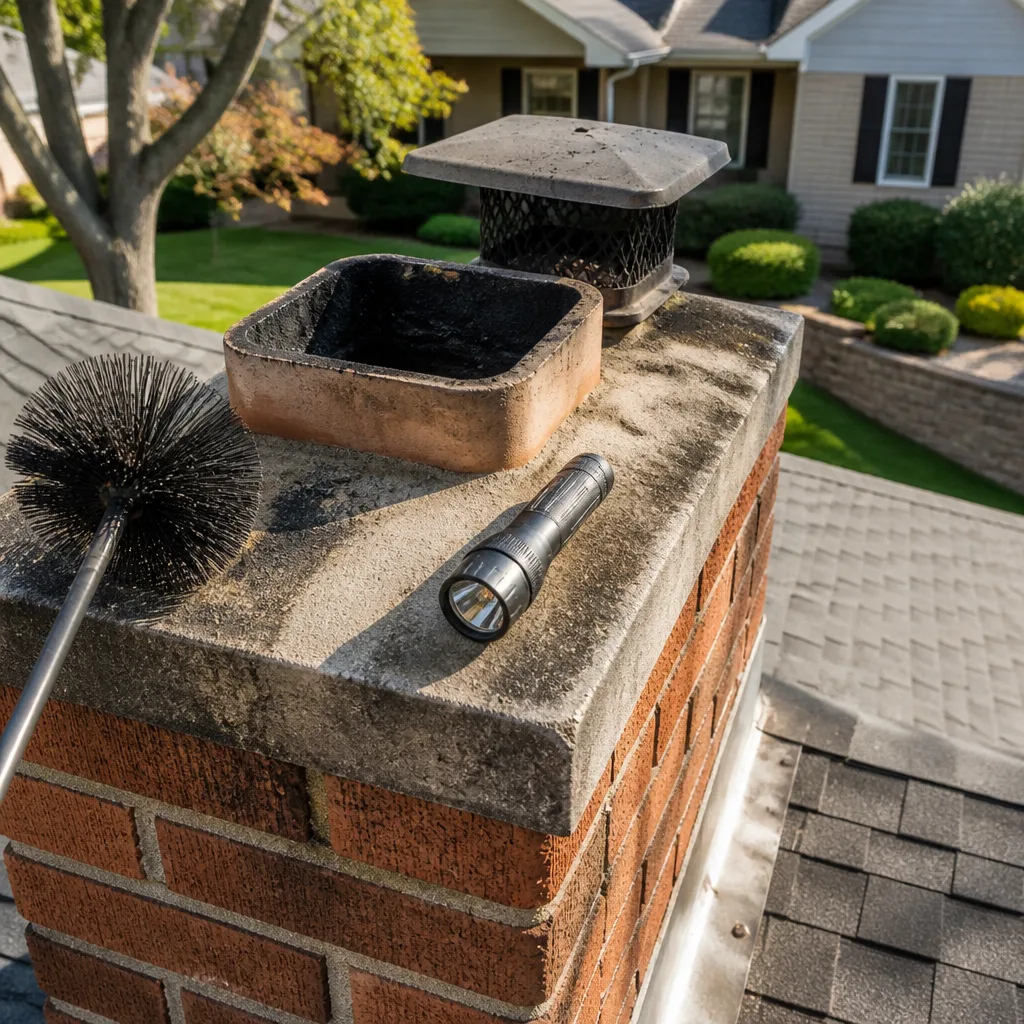
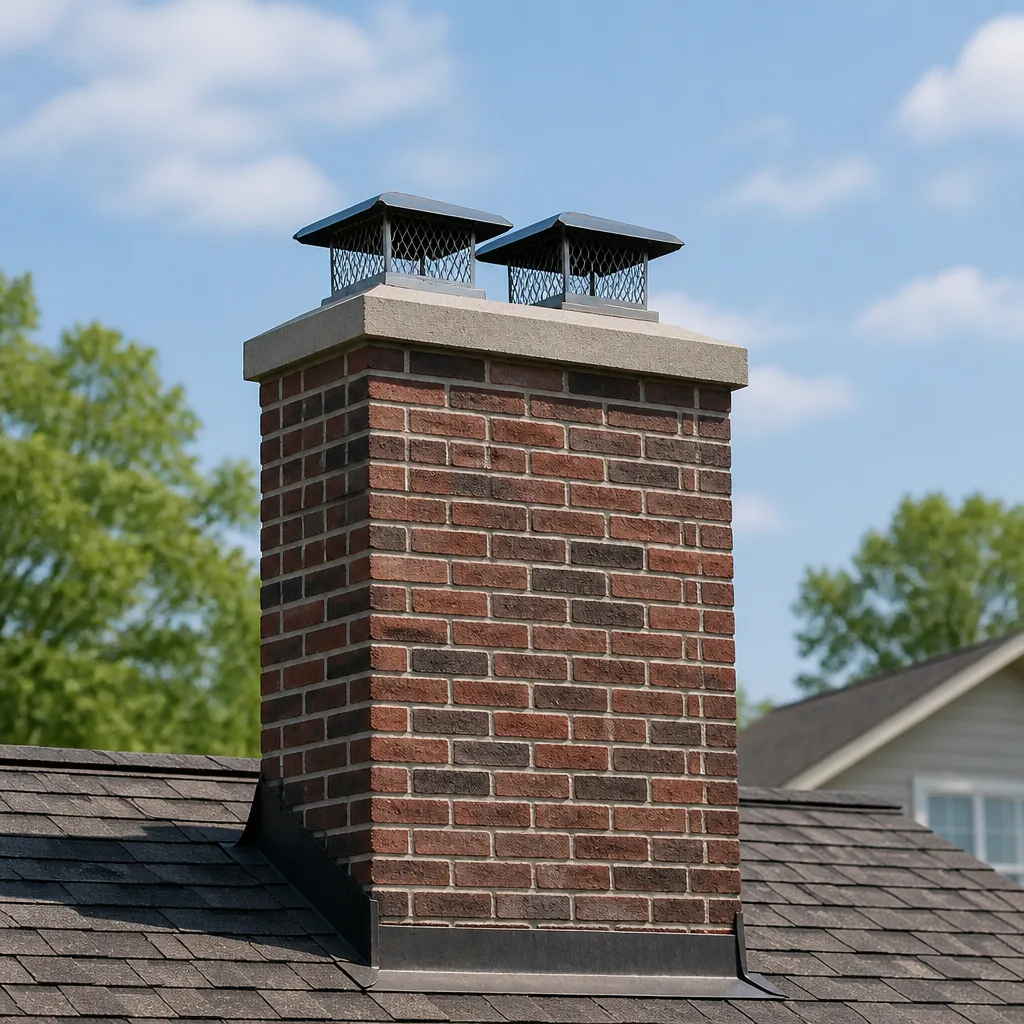
- Damage to the chimney crown and the cap, which may have cracked from heat or water penetration.
- Structural damage to the masonry in the smoke chamber and the chimney above the roof line.
- Signs of extension into the attic or framing if the fire department didn’t already confirm it.
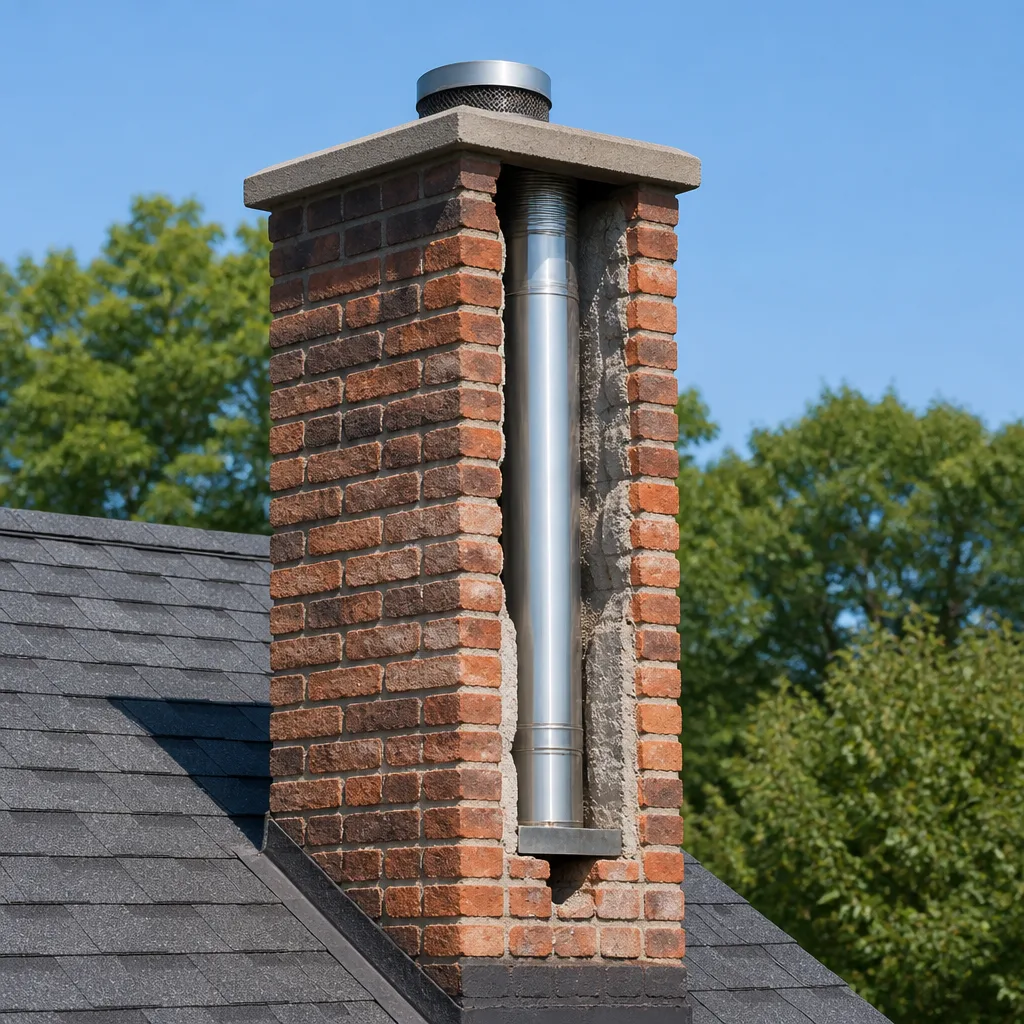
What a chimney fire actually does to a liner is worth understanding. Clay tile is brittle, and it doesn’t handle rapid temperature swings well. Metal liners work well under normal burning but can fail in a hot fire. Either way, once the liner is compromised, the chimney is no longer a safe path for smoke. The good news is that a lot of damage can be repaired. Relining a deteriorated flue no longer requires knocking the chimney down. A flexible liner system like DuraFlex lets a professional restore a safe flue path inside the existing chimney chase. Resurfacing a liner that’s still structurally sound with HeatShield restores its interior face without a full reline. If the crown or cap took damage, that’s a straightforward renewal in our chimney cap & crown service.
Before you light a fire in that fireplace again, get the inspection. We can walk you through what the camera finds and what it means, so you can decide whether to restore, reline, or repair with a clear picture of what’s actually damaged. That’s the point of a written report with photos: you see it too, not just take our word for it.
Pre-Season Preparation for Tacoma Homes
Chimney emergencies are mostly a cold-season problem, and Tacoma’s damp winters mean chimneys that sat idle since spring are often the most vulnerable. The wet fall weather drives moisture into masonry, which weakens mortar and spalls brick. By the time you light the first fire in November, whatever happened to the crown and liner over the year is baked in. This is why pre-season work matters.
Here’s the preparation checklist we’d suggest for a Tacoma home heading into the burning season:
- Schedule the annual inspection before the first fire. Late summer or early fall is the ideal window. An inspection catches a cracked crown, a rusted cap, or a liner problem while there’s still time to fix it.
- Get the flue swept if it’s due. A sweep removes the creosote layer that builds up over a season or two of burning, and it’s what keeps a normal fire from becoming an emergency. Most homes need a sweep once a year, more if you burn often.
- Check the crown and cap. Look for cracks, rust, or missing cap sections. A cap with a rusted-out screen is an invitation to birds and rain. A cracked crown lets water into the masonry.
- Clear the chimney and ground-level vents. Leaves, fir needles, and even snow can block an exhaust path. Tacoma is a needle-heavy town.
- Test smoke and CO alarms. Replace the batteries, and press the test button on each alarm. If any alarm is more than a few years old, replace it.
- Have the fireplace and appliance checked together. If you have a gas insert or a wood stove, the appliance itself needs a check, not just the chimney. A unit that’s burning inefficiently is dumping more creosote into the flue. For that work, our fireplace repair team covers the appliance side.
None of that is complicated. It’s just work that’s easy to put off, and putting it off is what turns a routine season into a chimney fire. If you’re not sure where you stand, get an inspection. If nothing is due, we’ll tell you it can safely wait. If something needs attention, you’ll see the evidence in the report before any work is booked.
Burning Habits That Prevent Most Emergencies
The best chimney emergency plan is the one that never gets used. Most chimney fires happen to homeowners who burn a lot and don’t think about creosote until something goes wrong. Small changes make a big difference.
- Burn dry, seasoned wood. Wood that’s been split and stacked for at least a season burns cleaner. Wet wood smolders and produces more creosote.
- Don’t damper down a fire overnight. Smoldering fires produce the most creosote. An overnight burn that’s choked down is exactly how the flue gets caked.
- Don’t burn paper, cardboard, or treated wood. These produce more creosote and can send burning debris up the flue.
- Watch the smoke. A fire that’s burning well sends mostly heat and clear exhaust up the flue. Visible smoke means incomplete combustion, and that’s where creosote comes from.
- Keep a clean firebox. Don’t let ash build up so far that it affects air flow.
- Never burn with a broken or missing cap. Rain, animals, and debris can enter the flue. If your cap is damaged, get it replaced before the season starts.
The one habit that matters more than any other is the annual sweep. Creosote is the fuel for chimney fires. It builds up gradually, and you can’t see it accumulating without looking up the flue. A yearly sweep keeps it at levels that are safe to burn. That’s the whole game: keep the creosote low, and the fire stays in the firebox.
Common Mistakes to Avoid
- Opening the damper to “let the fire out.” This feeds oxygen to a chimney fire and makes it worse. Close the damper and get out.
- Assuming an annual inspection isn’t necessary because the fireplace “looks fine.” Most liner damage and creosote buildup is invisible from the firebox. A camera-assisted inspection sees what you can’t.
- Skipping the fire department because the fire seems to have died down. A chimney fire can do damage that’s not obvious, and it can smolder in framing. Call them and let them assess.
- Relighting the fireplace after a chimney fire without an inspection. A cracked liner or warped metal flue needs to be found before the next fire, not after.
- Hiring a generalist contractor for a chimney job. Roofers and handymen don’t have the training to evaluate a liner or operate a camera inspection. Chimney work is its own trade.
- Leaving a gas fireplace insert or older oil appliance unserviced. Carbon monoxide risk builds quietly. Have the appliance and the flue checked yearly.
- Using a chimney that hasn’t been swept since the last season. Creosote doesn’t go away between burns. It builds.
See the difference
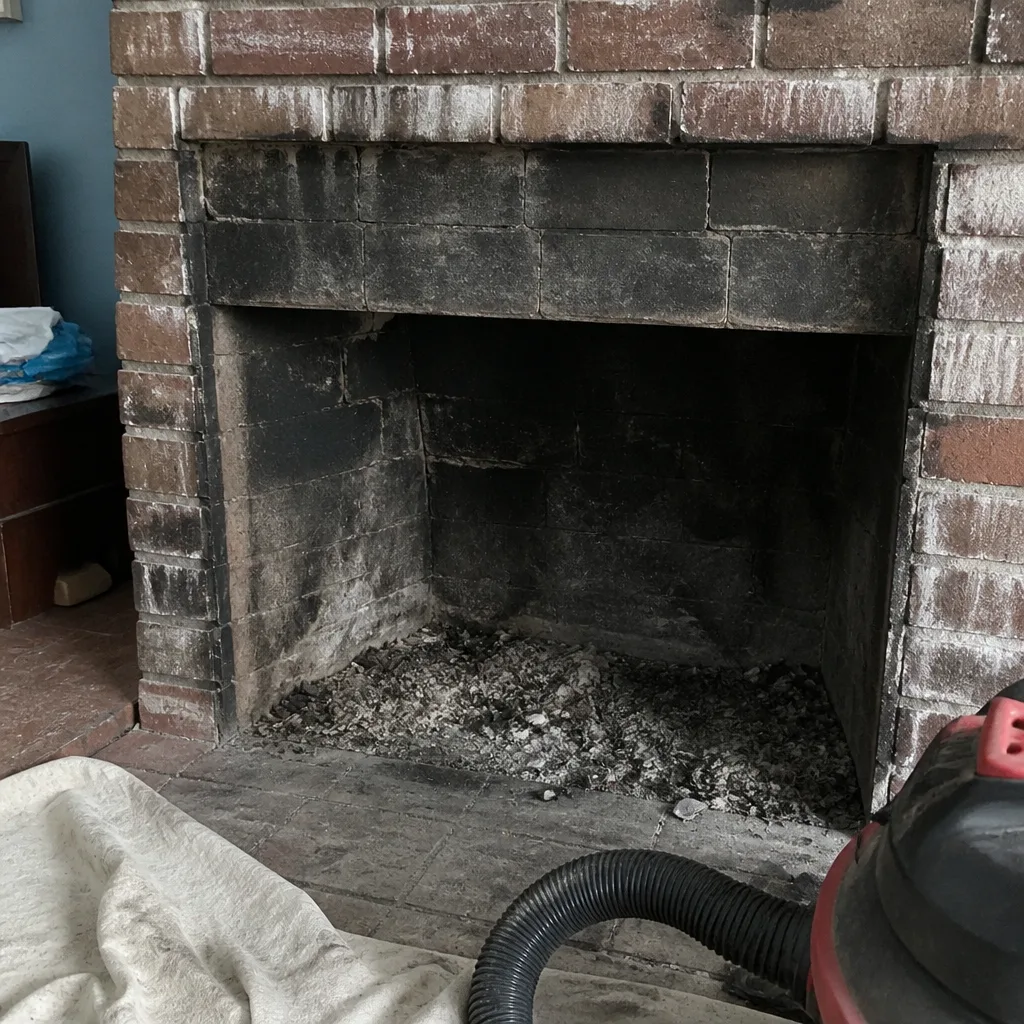 Before
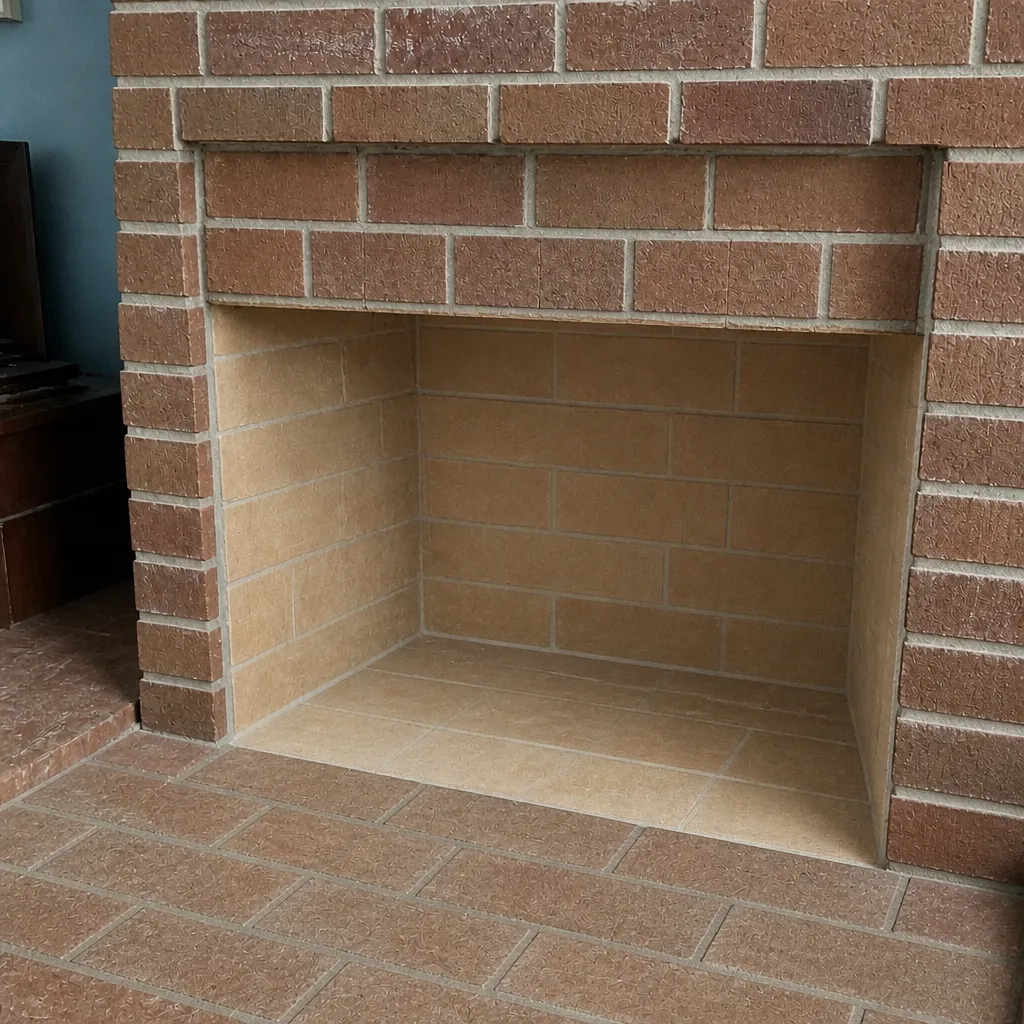 After
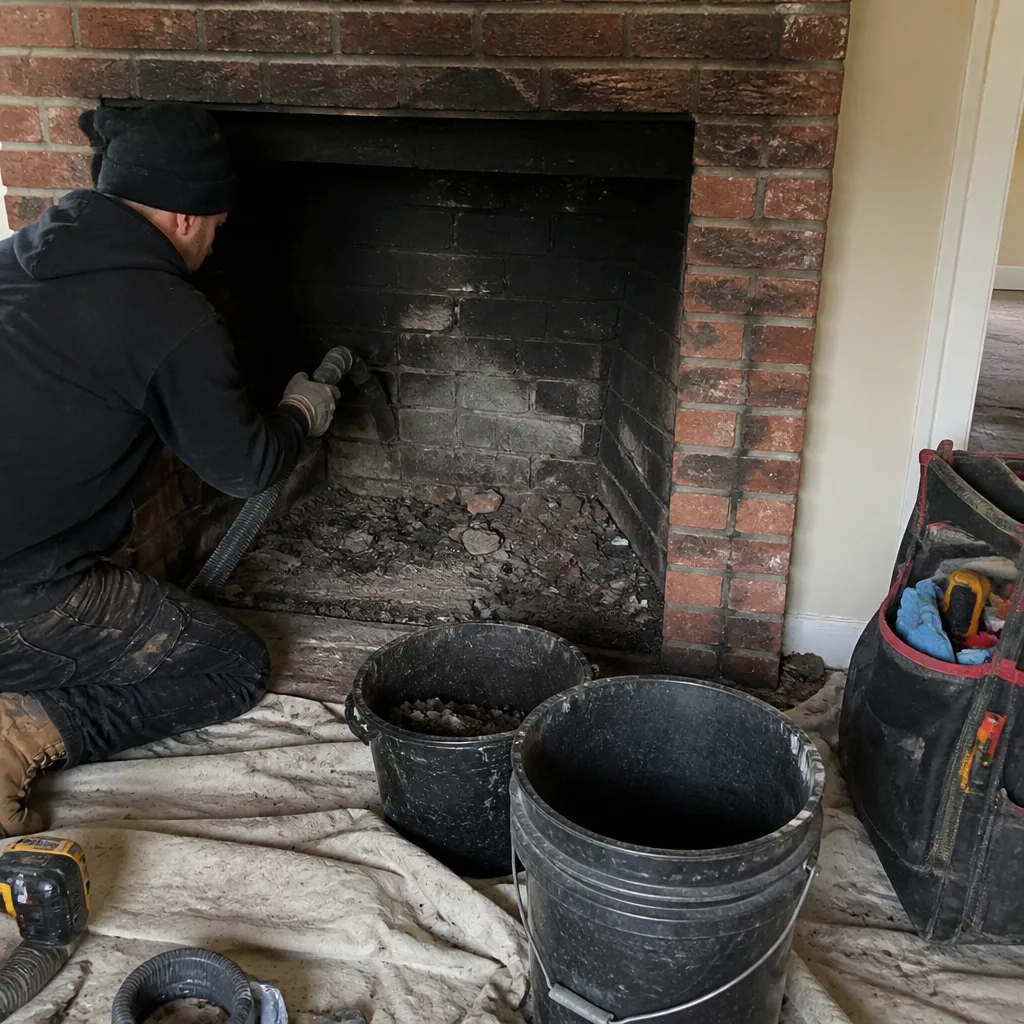 Before
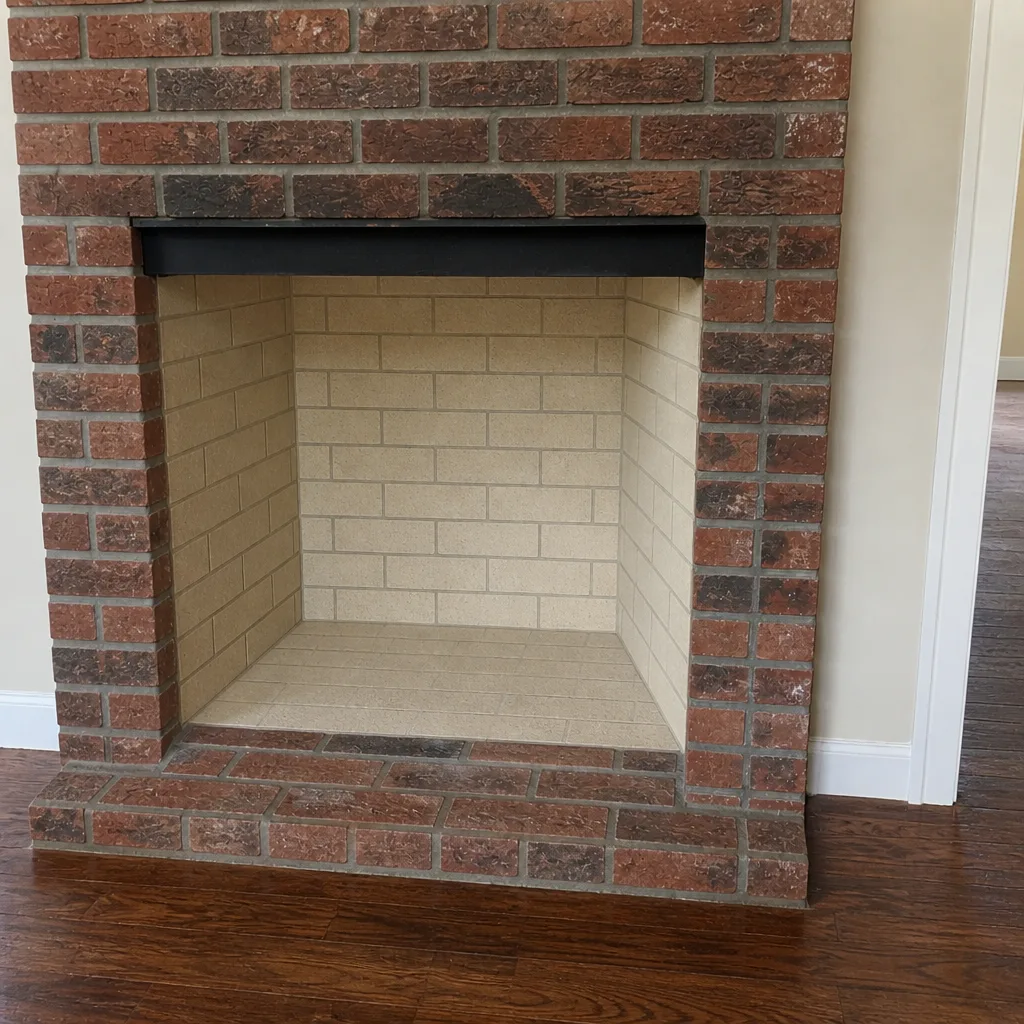 After
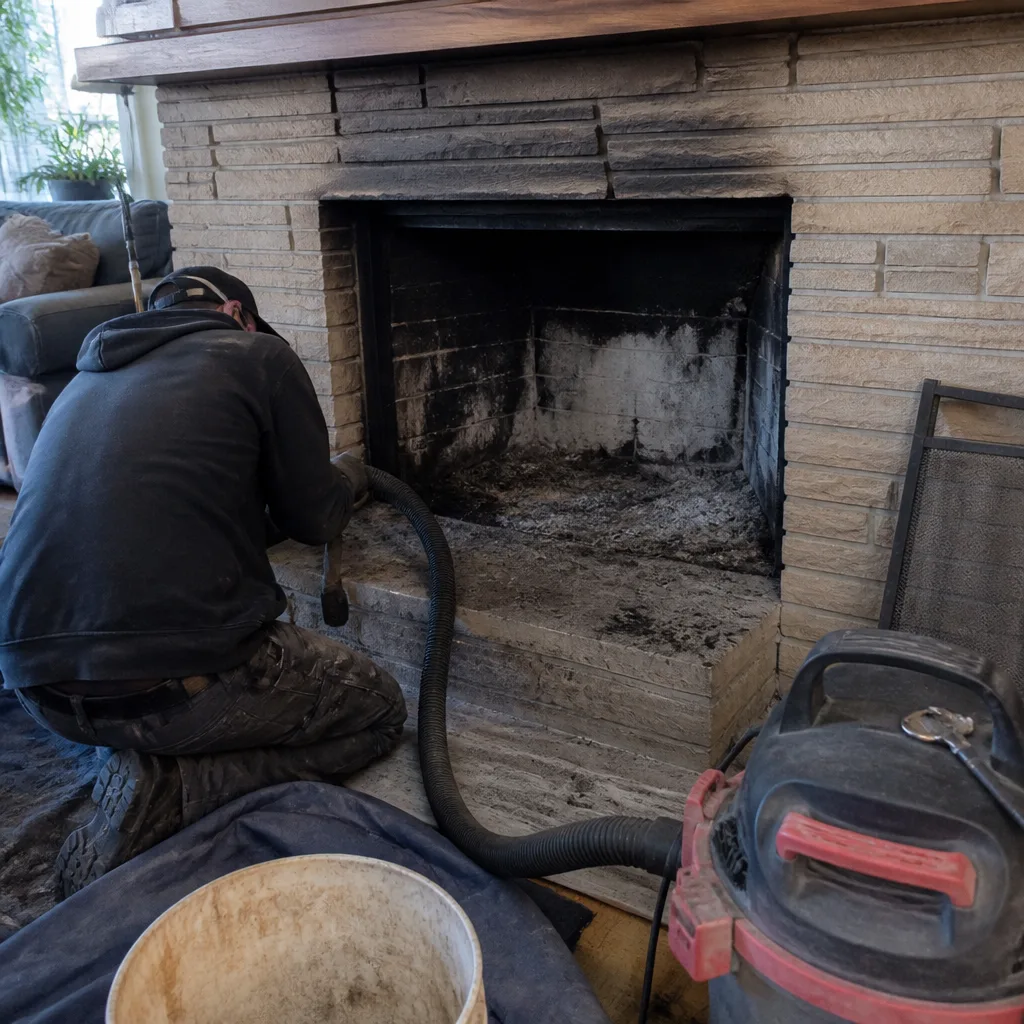 Before
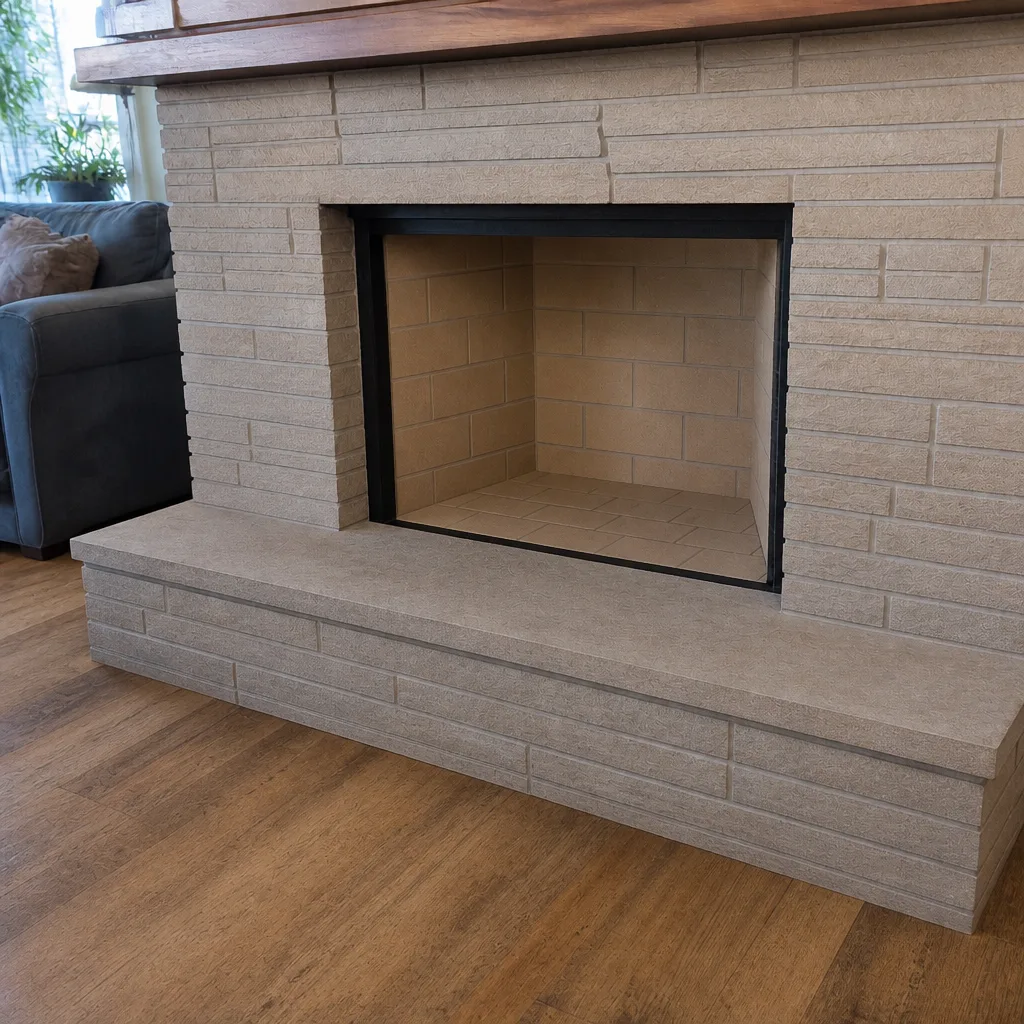 After
When to Call a Professional
Call a chimney professional in several specific situations: after any chimney fire, before lighting a fireplace that hasn’t been used in a year or more, if you see cracked crown or cap damage, if you smell smoke or creosote odors in the house between burns, or if your CO alarm has gone off. Also call if your fireplace burns poorly, backdrafts, or smokes into the room. And call if your home has never had a camera inspection and you’re planning to use the fireplace through the winter. Tacoma Chimney Sweep offers free estimates in Tacoma, and our technicians have up to 14 years of experience working with full-system chimney issues, from the firebox to the crown. We answer 24/7. Call (833) 513-8117 to book an inspection.
Frequently Asked Questions
A chimney fire typically produces a loud roaring or rumbling sound that seems to come from inside the flue, intense heat radiating from the chimney surface, and sometimes flame or sparks visible at the top. A normal fire stays noisy in the firebox and sends only a thin, steady drift of smoke out the top. If the noise seems to come from up in the wall or the flue, treat it as a chimney fire.
No. Closing the damper starves the fire of oxygen and helps slow it down. Opening it does the opposite: it feeds more air to the flames and can push fire and smoke further into the system. Close the damper, get out of the house, and call 911.
Yes. A Level 2 inspection with a camera is required before you use the fireplace again. It looks for cracked clay tiles, warped or separated metal liners, failed mortar joints, creosote glazing, and crown or cap damage that isn’t visible from the firebox. Skipping it risks firing a compromised flue.
Headache, dizziness, nausea, fatigue, and confusion are the common symptoms, and low-level exposure feels like the flu. A CO alarm is the most reliable signal. If an alarm sounds or you feel symptoms, get everyone outside and call 911. Don’t wait for the alarm to stop.
No. The visible firebox tells you very little about the flue above it. A cracked liner or a warped metal flue won’t show up from inside the firebox. Get the inspection first. If the flue is damaged, options range from heat-rated resurfacing with a product like HeatShield to a full reline with a flexible system like DuraFlex.
Once a year, ideally before the burning season starts. If you’ve had a chimney fire, a change in how the fireplace burns, or a CO alarm go off, get an inspection immediately regardless of when your last one was. To schedule one, call (833) 513-8117; estimates are free.
The Bottom Line
Most chimney emergencies follow the same pattern: creosote built up, a fire got hot, and a flue that was never inspected gave way. The plan that prevents that is boring: get swept, get inspected, check the crown and cap, and keep the CO alarms alive. When something does go wrong, close the damper, get out, and call 911. After the fire department clears the structure, get the Level 2 inspection before you light another fire. If you’re in Tacoma and want a straight answer about where your chimney stands, call Tacoma Chimney Sweep at (833) 513-8117. We answer 24/7, fast dispatch from 7am to 7pm, Sunday through Friday, and estimates are free.
Written by the team at Tacoma Chimney Sweep.