
Last updated November 24, 2026
 Sweep & inspection
 Caps & crowns
 Flue relining
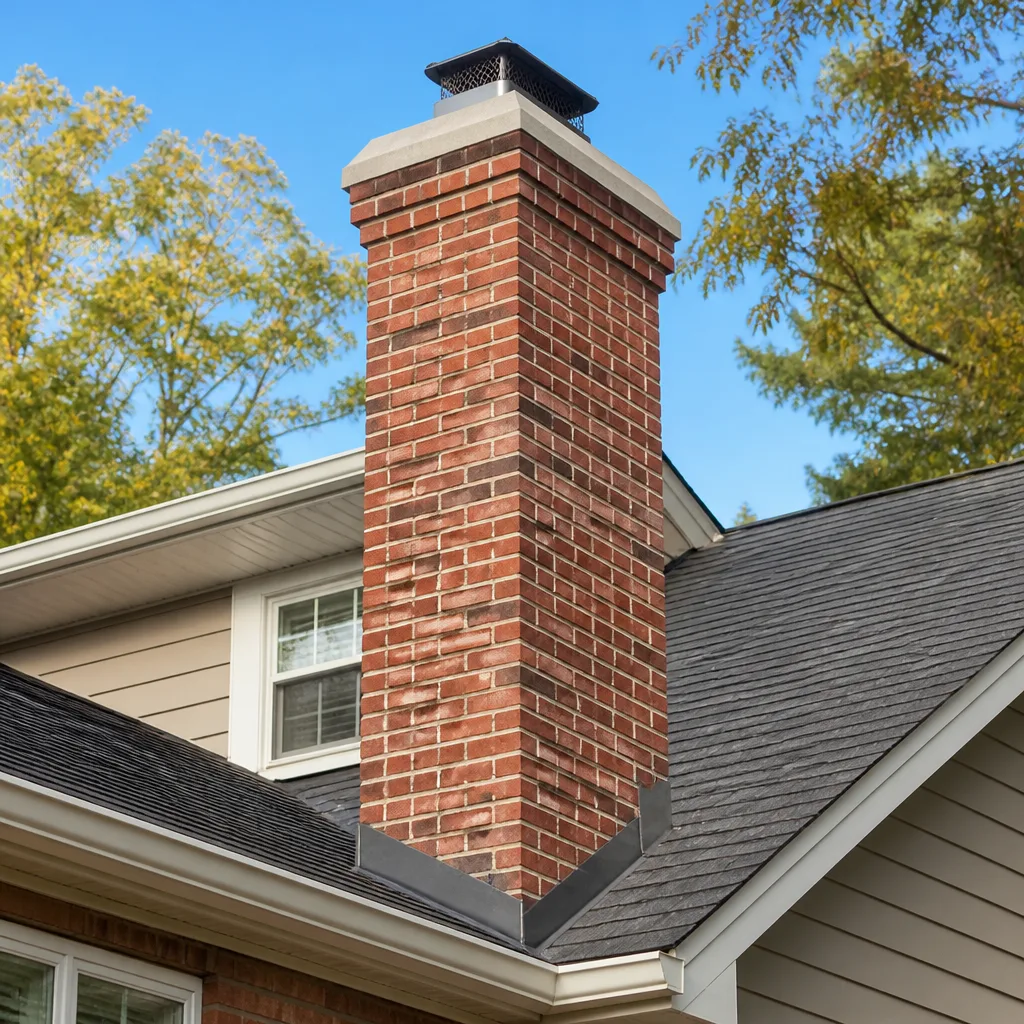 Masonry repair
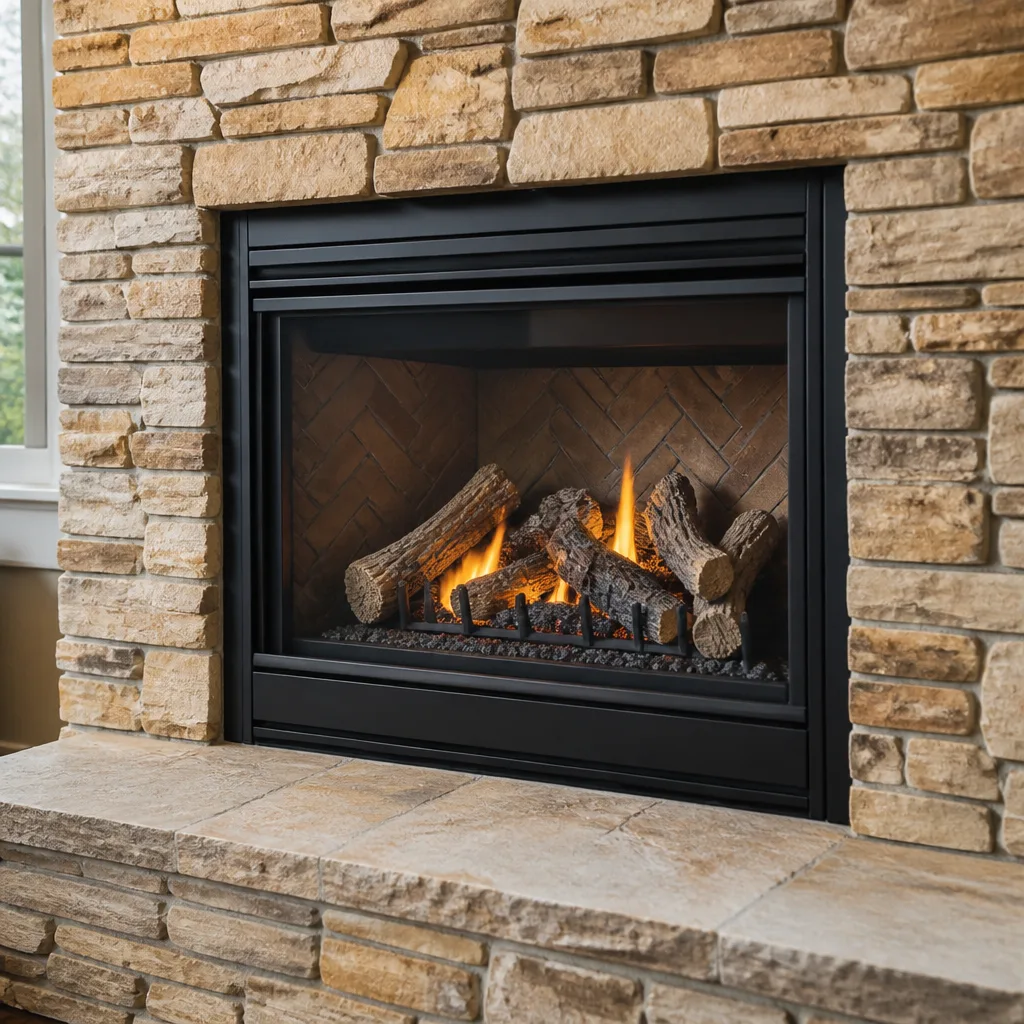 Gas fireplace service
Level 1 sweep and inspection to the NFPA 211 annual standard - flue, crown, cap, and flashing checked and photographed
Chimney sweep logs do not sweep chimneys. They loosen some creosote - which then falls where a brush and vacuum still have to collect it.
Chimney Cleaning Permits, Codes & Inspections in Tacoma, WA: What You Need to Know
Most homeowners assume a chimney sweep and a building permit have nothing to do with each other. That’s true right up until the work shifts from cleaning to repair. The moment a job touches the liner, the firebox, or a new appliance, Tacoma’s building code and Washington State’s residential code step in, and the rules aren’t always obvious. This guide maps exactly where that line sits. You’ll learn which chimney jobs need a City of Tacoma permit, how WAC 51-51 governs fireplaces and flues, when a Level 2 NFPA 211 inspection is triggered, and how permits and inspection paperwork intersect with your homeowner’s insurance. It’s written from Tacoma, for Tacoma homeowners.
Quick Answer
Routine chimney cleaning in Tacoma does not require a building permit. A permit becomes necessary when work crosses into structural or system changes: liner replacement or relining, firebox and masonry repair, chimney cap and crown replacement on some jobs, and any new or replaced appliance and its venting. A Level 2 NFPA 211 inspection isn’t a permit, but it’s triggered by real estate transactions and by any event that may have damaged the chimney, and it’s the documentation that protects you when insurance questions come up.
Styles & brands we work with
- Sweep & inspection
- Caps & crowns
- Flue relining
- Masonry repair
- Gas fireplace service
Table of Contents
- Which chimney jobs need a City of Tacoma permit?
- How Washington State’s residential code (WAC 51-51) applies to chimneys
- What a Level 2 NFPA 211 inspection is, and when it’s triggered
- How permits affect homeowner’s insurance coverage
- Pierce County and City of Tacoma permit pathways and timelines
- Buying or selling a home with unpermitted chimney work
- Why Tacoma’s wet season matters for chimney condition
- Common mistakes to avoid
Which chimney jobs need a City of Tacoma permit?
The table below is the fastest way to answer the question most homeowners actually have: will this job need paperwork before it starts? The short version is that cleaning is maintenance and repairs to the system are construction. Anything that changes the flue, the firebox structure, the appliance, or the venting path is generally permit territory. Cosmetic and access work usually isn’t.
- Routine sweeping and cleaning: No permit required. This is maintenance.
- Level 1, 2, or 3 inspection: No permit required. These are documentation, not construction.
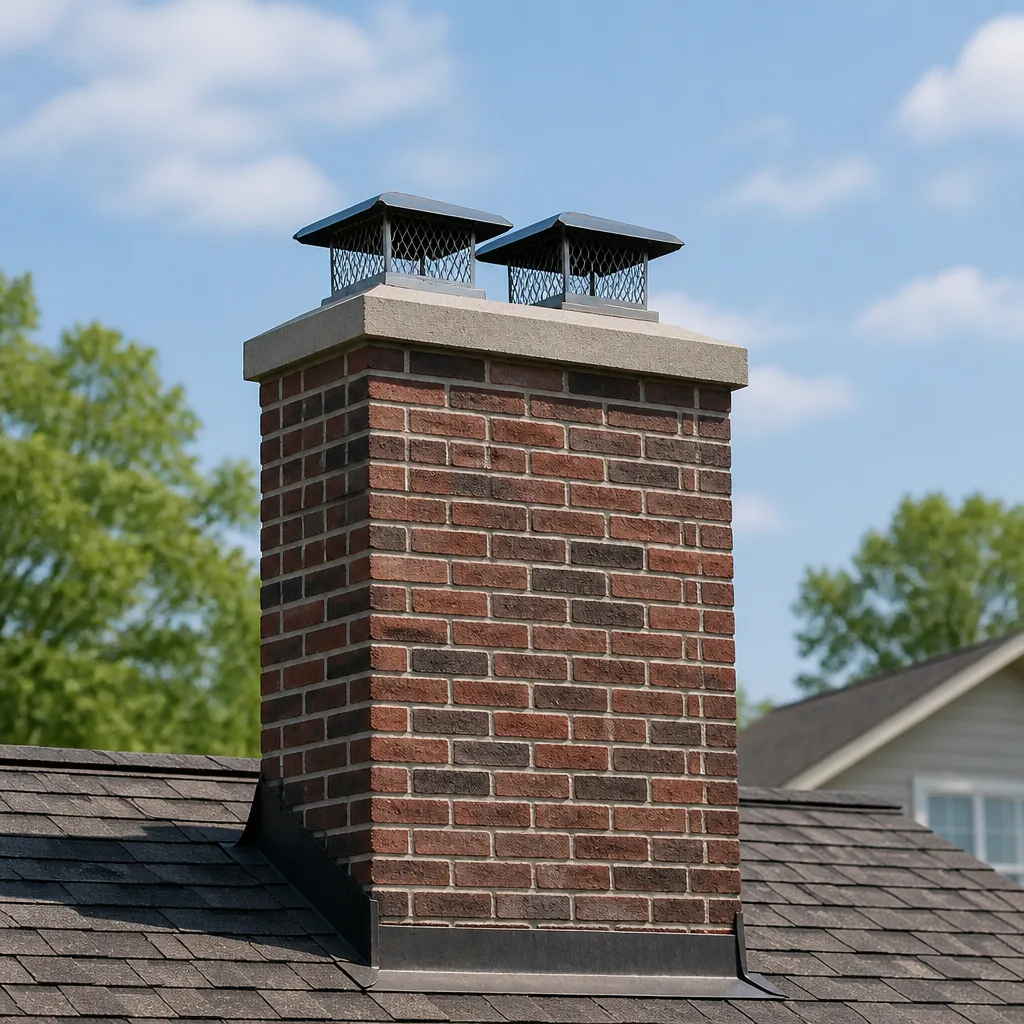
- Chimney cap and spark arrestor installation: Not applicable in most cases. Cap and crown work that involves rebuilding the crown, changing the flue termination, or altering the chimney’s height or structure can move into permit territory, so confirm with the city before the job is scheduled. Our chimney cap & crown work is scoped so you know which side of the line you’re on before anything begins.
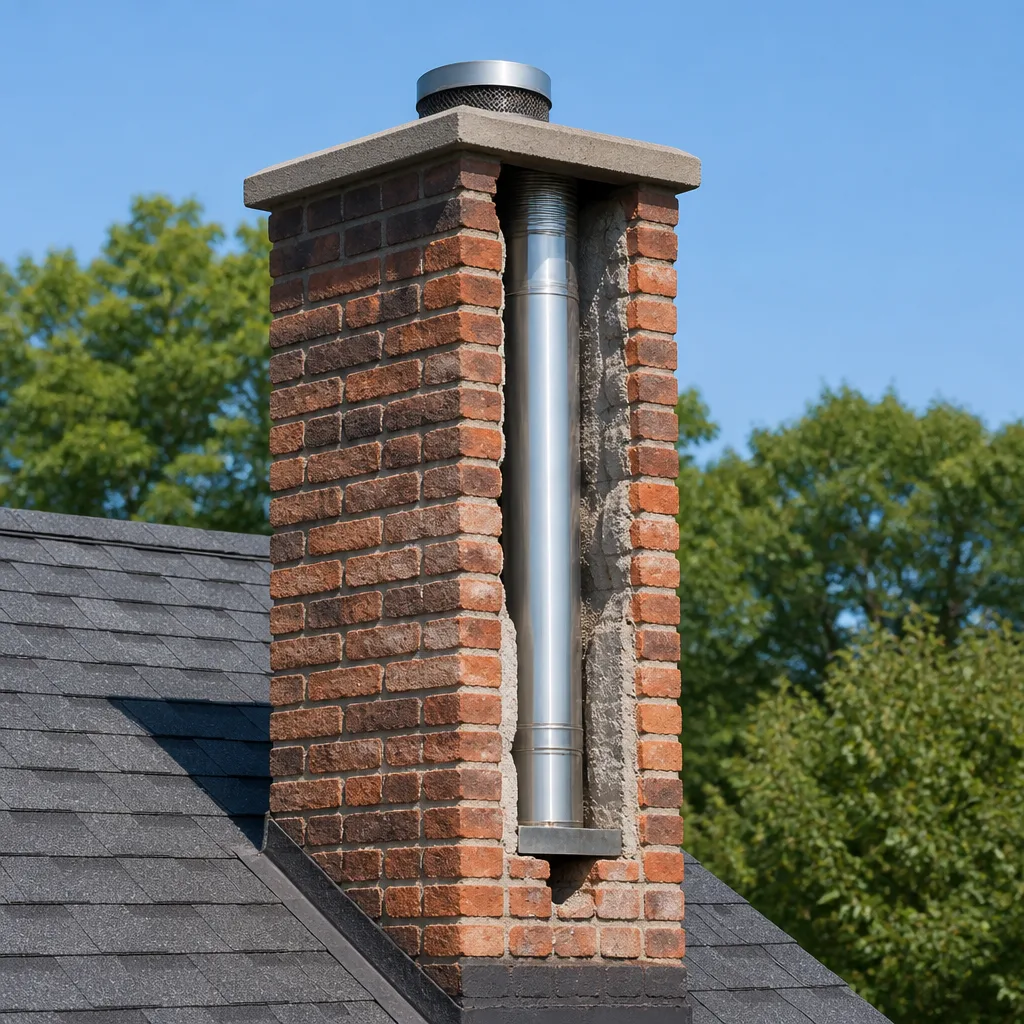
- Liner replacement or relining: Permit required. This is a change to the flue system and must meet clearance and material requirements.
- HeatShield liner resurfacing: Permit required in most jurisdictions. Resurfacing restores the existing flue lining, and the finished system still has to meet the same code requirements as a new liner. Confirm the scope with your local building department before scheduling.
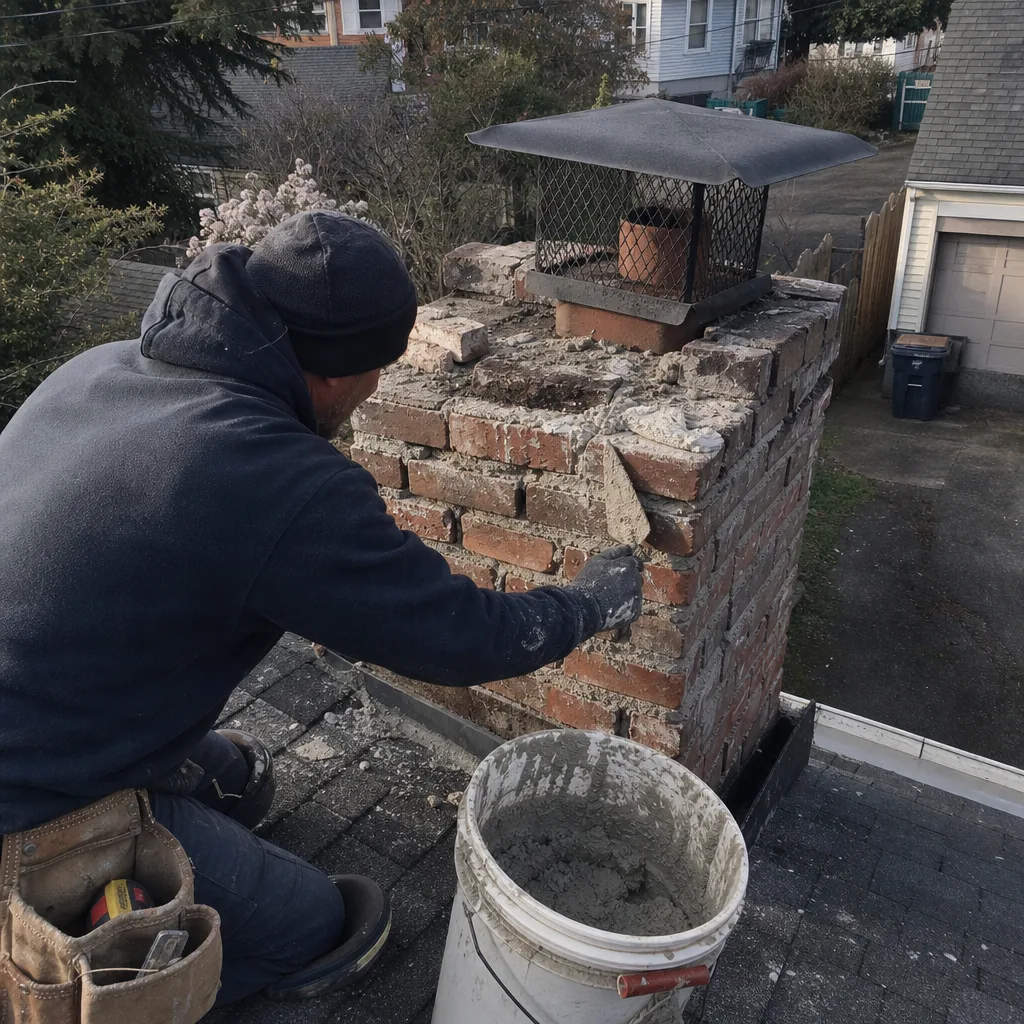
- Firebox and masonry structural repair: Permit required when the repair touches structural masonry, the firebox itself, or the chimney’s structural integrity.
- Appliance replacement (wood insert, new stove, or gas changeover): Permit required and typically inspection required. The venting has to be evaluated for the new appliance’s requirements.
- Dampers, screens, and cosmetic work: Not applicable in most cases.
If you’re not sure which category a particular job falls into, the answer is always the same: ask your City of Tacoma building department before the work starts. A quick call to the permit desk saves weeks of cleanup later. We’d rather you call and hear “no permit needed” than find out after the fact that one was.
How Washington State’s residential code (WAC 51-51) applies to chimneys
Washington State adopts its own residential code, WAC 51-51, which is the state-level adoption of the International Residential Code with Washington amendments. For homeowner purposes, the parts that matter most are clearance requirements, liner and flue material requirements, and hearth and firebox construction standards. Those are the parts that get checked when a permit inspection happens, and the parts that get flagged when a home sale is reviewed.
The three areas you’ll hear us talk about most when we walk a Tacoma home through a code review:
- Clearance to combustibles. Chimneys and flue connectors have a required clearance to framing, insulation, and any combustible material. Renovations that add insulation, move framing, or pack combustible material against the chimney are a common reason a flue fails inspection, and it’s a reason a Level 2 inspection opens up walls.
- Liner and flue requirements. The flue has to be lined with an approved material in good condition, sized appropriately for the appliance, and continuous through the chimney. A deteriorated clay tile flue or an unlined chimney is the most common code problem we find in older Tacoma homes. Correcting it means relining, and relining means a permit. The professional-grade materials we work with are specified for the job precisely because they’re designed and listed to meet these requirements.
- Hearth and firebox construction. Hearth extension dimensions, firebox clearances, and the relationship between the firebox and the surrounding structure are all spelled out. A firebox that’s been altered by a previous owner, patched with the wrong material, or built against combustible framing shows up here.
None of that is meant to scare you off a fireplace. It’s meant to explain why a permit and an inspection aren’t bureaucracy: they’re the state’s way of confirming that the system that vents smoke and carbon monoxide out of your home actually works the way the code assumes. Following those rules is not optional, and the paperwork is the proof that they were followed.
What a Level 2 NFPA 211 inspection is, and when it’s triggered
NFPA 211 is the standard that governs chimneys, fireplaces, vents, and solid fuel-burning appliances, and it defines three levels of inspection. A standard sweep visit is a Level 1 inspection: accessible portions of the appliance and venting, with the chimney swept and a report of what was seen. A Level 2 inspection is more thorough. It adds inspection of accessible portions of the chimney exterior and interior, and it uses video scanning of the flue where access permits, plus the attic, crawl space, and other accessible areas that can reveal problems with clearances or enclosure.
NFPA 211 and standard industry practice identify specific conditions that trigger a Level 2 inspection:
- A property is being sold or transferred. This is the most common trigger, and it’s why a Level 2 is often called a real-estate inspection.
- After any event that may have damaged the chimney: a chimney fire, a seismic event, a building fire, a lightning strike, or severe weather that may have affected the chimney’s structure.
- After an appliance change, a fuel change, or a change in the appliance’s operation.
- When a Level 1 inspection reveals something the sweep can’t fully evaluate from accessible areas.
- When a homeowner has moved into a home and the chimney’s service history is unknown.
The difference from a sweep visit isn’t just depth. A sweep is about cleaning. A Level 2 is about evidence: a video record of the flue, measured clearances, and a written report you can show to a buyer, an insurer, or a contractor. Our chimney inspection page covers what a Tacoma Level 2 involves from the customer’s end. For most questions, the practical answer is that if you’re buying or selling, if you don’t know when the chimney was last looked at, or if the chimney’s been through a fire or a shake, a Level 2 is the right call.
How permits affect homeowner’s insurance coverage
This is the section most homeowners have never read in their policy, and it’s worth ten minutes of your time. Homeowner policies generally pay for damage caused by a fire or water event that arises from a covered peril, but most policies contain exclusions, conditions, and duties-after-loss provisions that can affect a chimney claim. The provisions vary from one carrier to another, but they tend to cluster around the same themes:
- Code compliance language. Many policies pay for the damage the fire caused, but not automatically for the cost of bringing the repaired structure up to current code. Some policies offer limited additional coverage for code upgrades; others don’t. If your chimney work needs a permit because the repair must meet code, the difference between the damaged state and the code-compliant state can be the part the policy doesn’t cover.
- Documentation requirements. A chimney fire or water-damage claim will usually ask for evidence of maintenance, inspection, and installation. An inspection report, a permit record, and an installation document are exactly the kinds of paper a claim handler wants to see. If none exist, the claim often still gets paid, but the process takes longer and the outcome can be more contested.
- Unpermitted work provisions. Some policies contain language about disclosure of unpermitted work and can affect how a claim is handled if the loss is traced to work that wasn’t permitted or inspected. This provision is seldom read by homeowners and is exactly the one we hear about after the fact. It’s also why a buyer who discovers unpermitted liner work faces a real problem: the work needs to be corrected, either to satisfy the lender’s or the inspector’s requirements or to protect the buyer’s coverage going forward.
- Duty to maintain. A chimney that’s never been inspected or swept can be treated as neglected, and a claim handler can lean on that. Keep records.
Read your policy language and, if you’re not sure how a clause applies, have a conversation with your agent or broker before the work rather than after. We can tell you what the code requires and what an inspection will document. We can’t tell you what your policy says, and we won’t guess.
Pierce County and City of Tacoma permit pathways and timelines
Permit jurisdiction in Tacoma follows a simple rule: if the property is inside Tacoma city limits, you generally pull the permit from the City of Tacoma’s building department. If it’s outside the city but inside Pierce County, the permit generally comes from Pierce County’s planning and public works department. Some projects fall under other jurisdictions depending on the property, and the permit desk is the place to confirm it. If you’re not sure which desk is yours, call the City of Tacoma permit line and ask them to confirm the jurisdiction before you book the work.
A typical chimney permit pathway looks like this:
- Confirm the jurisdiction. Call the City of Tacoma building department or Pierce County, depending on where the property sits, and confirm the address and the permit type.
- Gather the scope and the system. A chimney permit usually needs the appliance model, the flue system being installed, the liner material and listing, and the clearance details. If the job involves relining, the liner system’s installation instructions are part of the submittal.
- Submit the application. Many Tacoma and Pierce County permits can be submitted online, and over-the-counter permits can be issued the same visit for straightforward work. Complex or structural jobs can take longer to review.
- Schedule the inspection. The permit usually requires an inspection at a defined stage of the job. The inspection is when the clearance and material requirements get checked, and it’s the part that ends up in the public record.
- Keep the final documentation. Retain the inspection sign-off with your home records. That is the paper that closes the loop with your insurer and holds up in a home sale.
Realistic timelines depend on the size of the job and how busy the permit desk is. Minor jobs with complete submittals are typically turned around faster than a reline that requires plan review. Budget more time than you think you need, and don’t start work before the permit is issued. As for who pulls the permit: on work we’re doing, that’s part of the conversation up front. We’ll tell you exactly what’s going to be permitted and who’s filing it.
Buying or selling a home with unpermitted chimney work
The risk of unpermitted chimney work is real and mostly lands on the buyer. A firebox that was rebuilt without a permit, a liner that was installed without inspection, or a flue that was chased with the wrong material can all be invisible under a fresh coat of paint. When a sale closes and the buyer later has the chimney inspected, or an insurer or adjuster asks questions, the finding can force remediation that dwarfs what a permit would have cost – and it’s the buyer, not the seller, who is holding the house.
What we recommend to both sides of the transaction:
- Buyers: ask for the chimney’s inspection and permit history, and if the seller can’t produce one, request a Level 2 inspection as a condition of the sale. The cost of that inspection is small compared to what it can reveal.
- Sellers: get the inspection done before you list, and if unpermitted work turns up, disclose it and get it corrected. A pre-listing Level 2 and a clean permit record prevent the deal from stalling at the wrong moment.
- Both: treat a chimney inspection report the same way you’d treat a roof or foundation report. It’s a home record, not a sales obstacle.
The same applies after any event that may have affected the chimney: a chimney fire, a seismic event, or a fire in the structure. That’s the point where a Level 2 inspection is triggered by the standard, and it’s also the point where the insurance documentation starts to matter.
Why Tacoma’s wet season matters for chimney condition
Tacoma’s wet, humid climate is the reason chimneys here need a physical check as much as a cleaning. The chimney is a brick and masonry structure sitting on a roof in a climate with a long, wet stretch of the year, and the same moisture that grows moss on the roof works on the chimney. Crown cracks show up, brick spalling follows, and the condition that lets water in is the condition that can let cold air and smoke back into the house or weaken the structure over time.
The practical consequences:
- Crowns fail first. The crown is the concrete cap at the top of the chimney, and it’s the part most exposed to a damp climate. A cracked or spalled crown lets water into the chimney’s interior, where it gets into the flue and into the masonry. We install crowns in a weather-ready state so the repair holds through the wet season. That work is covered on our chimney cap & crown page.
- Brick and flue tile age together. Wet-dry cycles crack flue tile, and a cracked flue tile is a passage for creosote and smoke where it shouldn’t be. That’s when relining enters the picture, and relining is permit work.
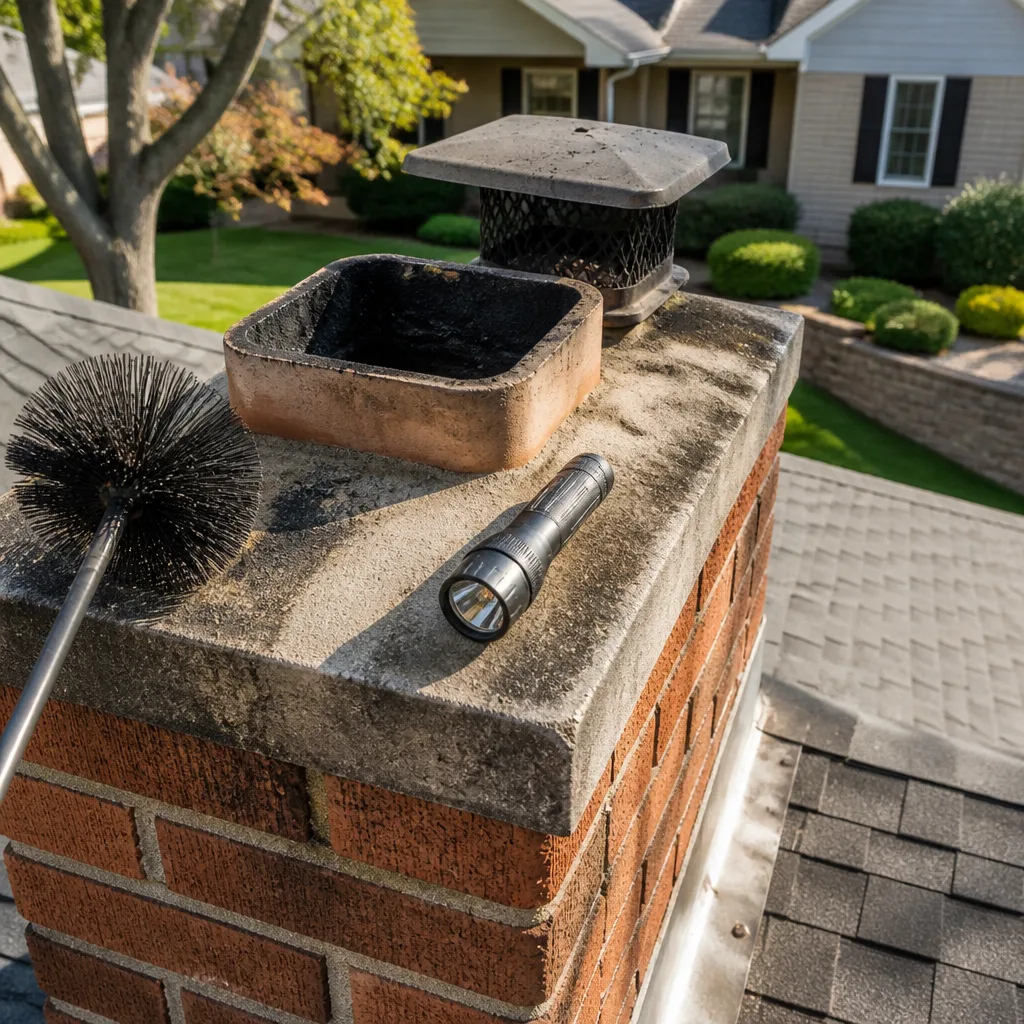
- Creosote buildup is a seasonal problem. A wood-burning fireplace accumulates creosote in the flue, and when it builds up it can be the fuel for a chimney fire. Regular sweeping removes it. This is what a chimney sweep exists to do, and it’s a job for the shoulder season before the burning season begins, not a job for the middle of winter. Our chimney sweep page covers how we set up a seasonal schedule.
- Wood-burning and gas are different systems. A gas fireplace has its own venting requirements and its own inspection points. The condition that matters for a gas appliance isn’t the same as the condition that matters for a wood-burning one.
The pattern in Tacoma is consistent enough to plan around: inspections and sweeps are best done in the dry months before the burning season gets going, and any repair that opens the chimney should be scheduled and completed before the rain settles in. If your chimney has never been inspected or it’s been several years, that’s the case for this season, not next.
What a professional chimney visit actually includes
The reason homeowners hesitate is understandable: they’re worried they’ll be told they need thousands of dollars in liner or masonry work they have no way to verify. Our answer to that is simple. Nothing is recommended without camera evidence you can see yourself. The flue scan is shown to you, and if a repair can safely wait, we say so.
What a typical visit involves:
- Inspection first. We look at the firebox, the damper, the flue, the crown, the cap, and the visible chimney structure. If a Level 2 is warranted, that becomes the scope.
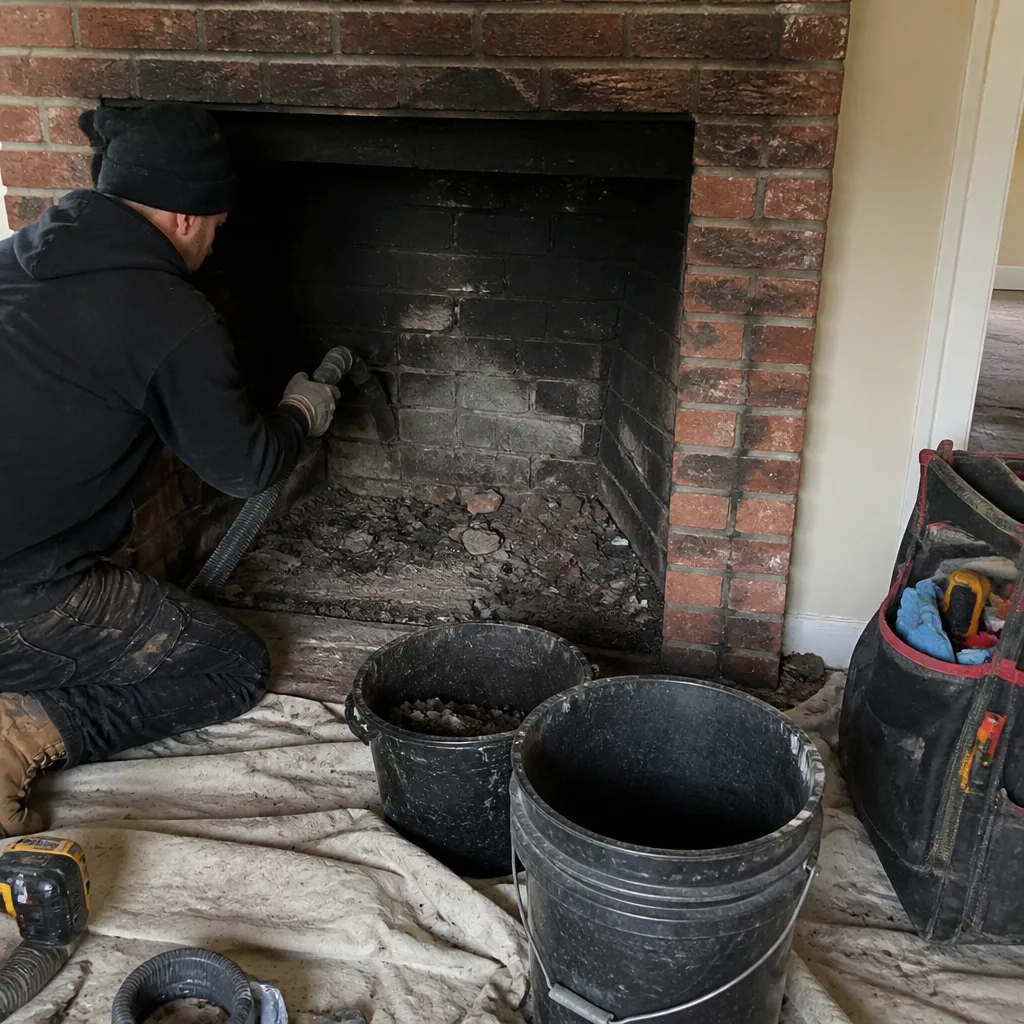
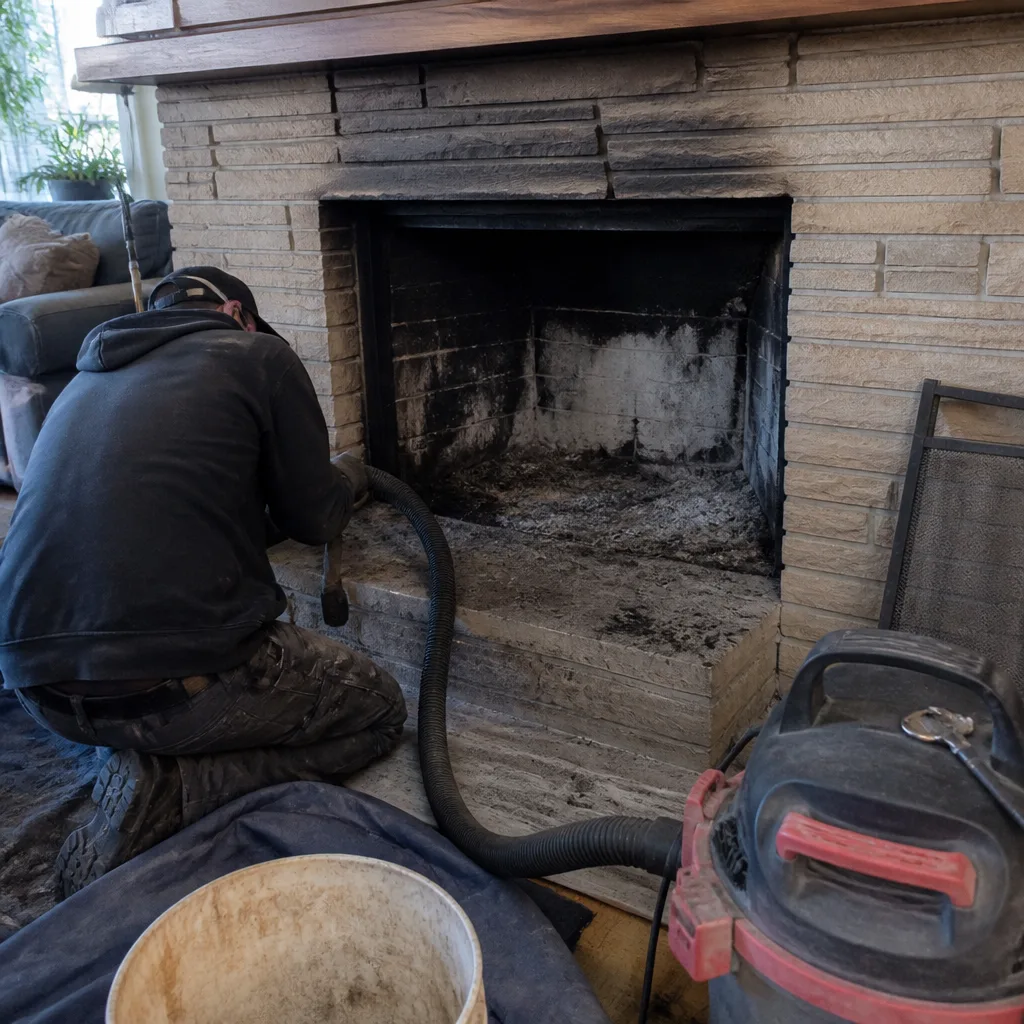
- Sweep. With the inspection done and the chimney’s condition known, the sweep removes soot and creosote from the accessible flue. The debris is contained and removed from the property.
- Protection of the home. Drop cloths, containment, and clean-up are part of the job. A chimney sweep shouldn’t leave dust behind.
- A written report. What was found, what was cleaned, what needs attention, and what can wait. The report is yours to keep, and it’s the documentation that matters later.
- Repair scope, if needed. If the inspection found a crown crack, a damaged flue, or a firebox issue, we scope the repair with you. If a reline is needed, we walk through the options and the permit requirement together.
Our technician team has up to 14 years of experience with chimney-specific work, and we don’t take on plumbing, roofing, or general contracting. That matters here because a chimney repair crosses into structural masonry, liner systems, and code requirements, and a specialist is doing the work from the firebox to the crown.
What happens when you call
- 1
A real person answersNo phone trees – you reach a local pro.
- 2
You get an upfront price rangeHonest numbers before anyone is dispatched.
- 3
A background-checked tech heads outLicensed & insured, dispatched right away.
- 4
You approve before work beginsNothing starts until you say go.
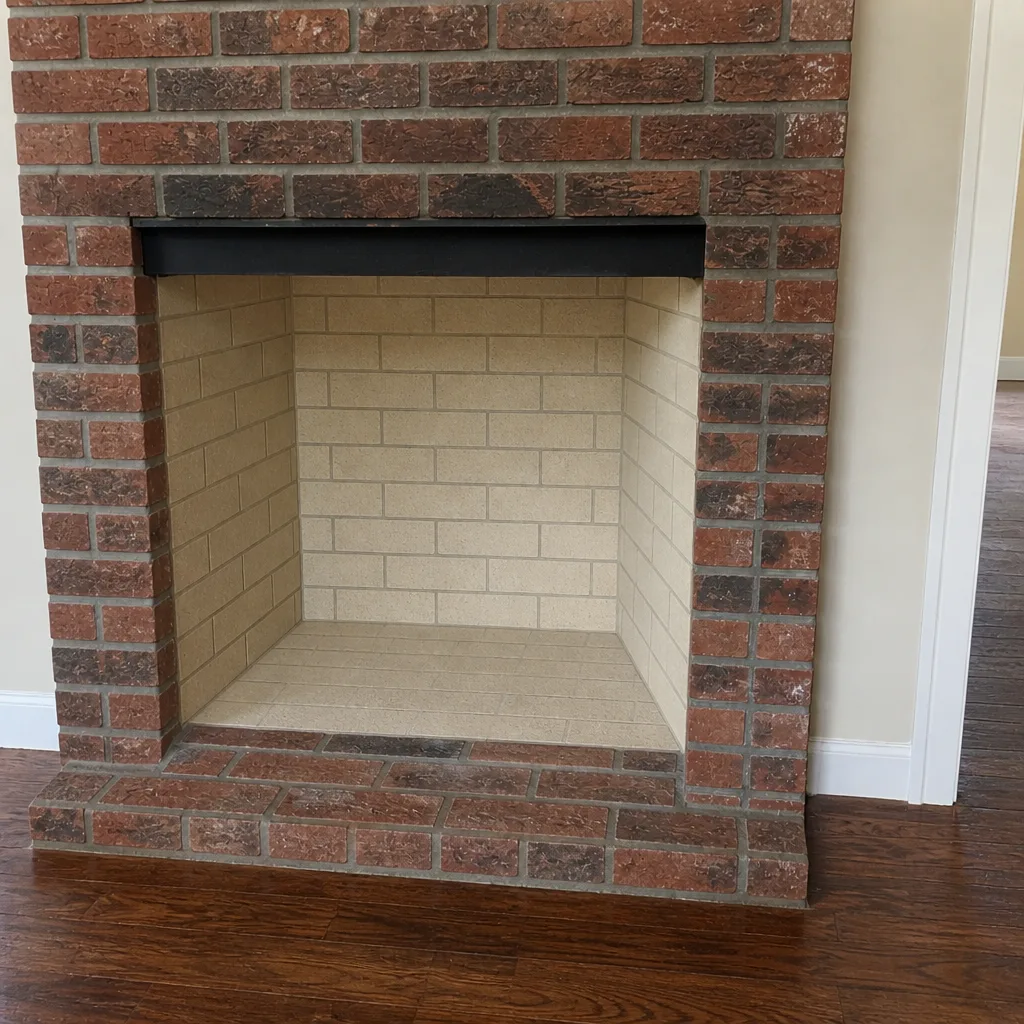
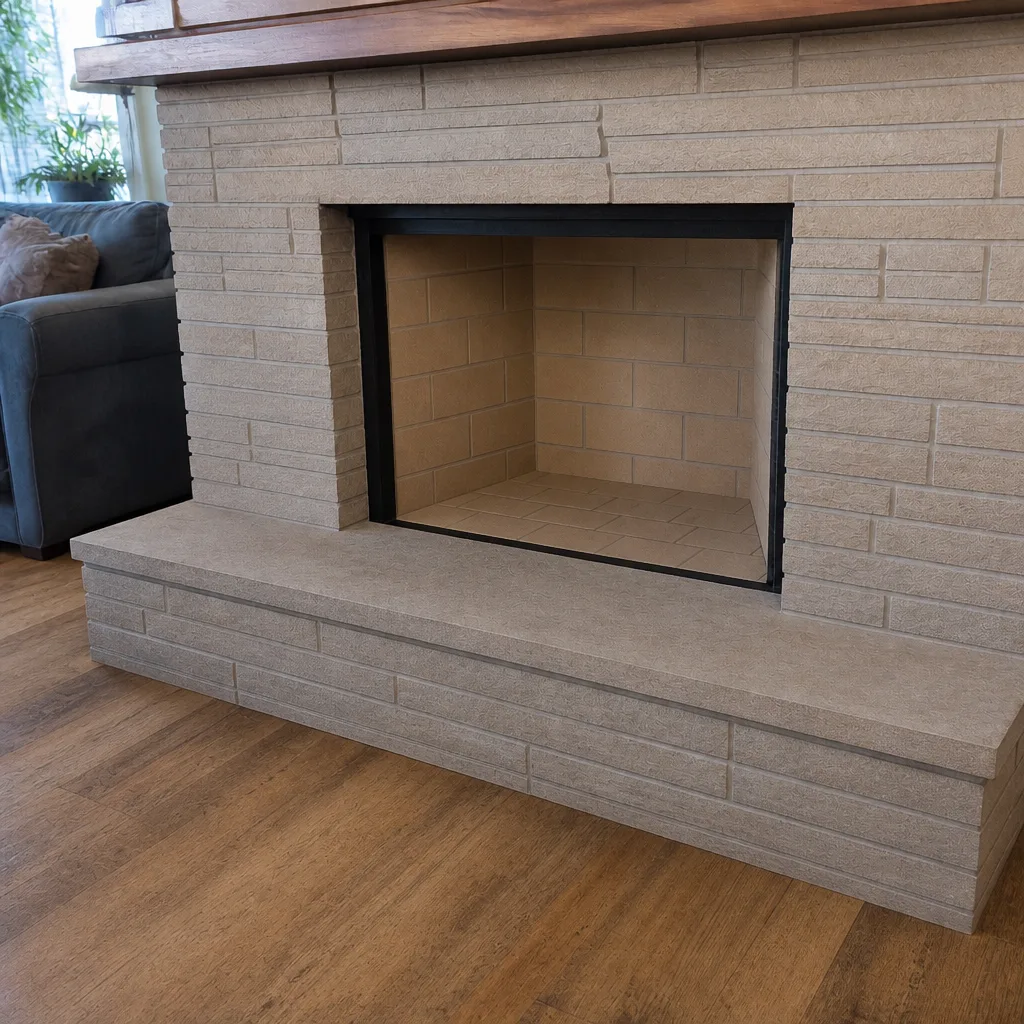
See the difference
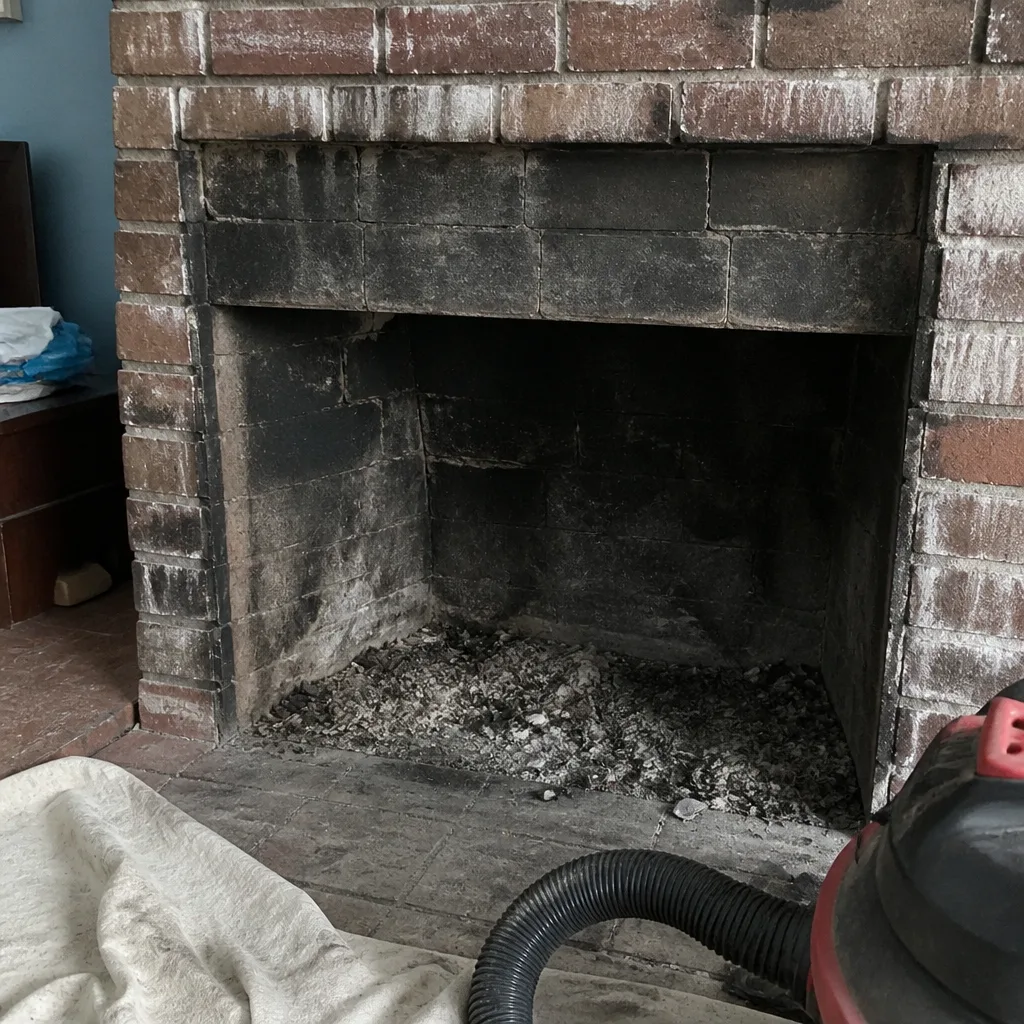 Before
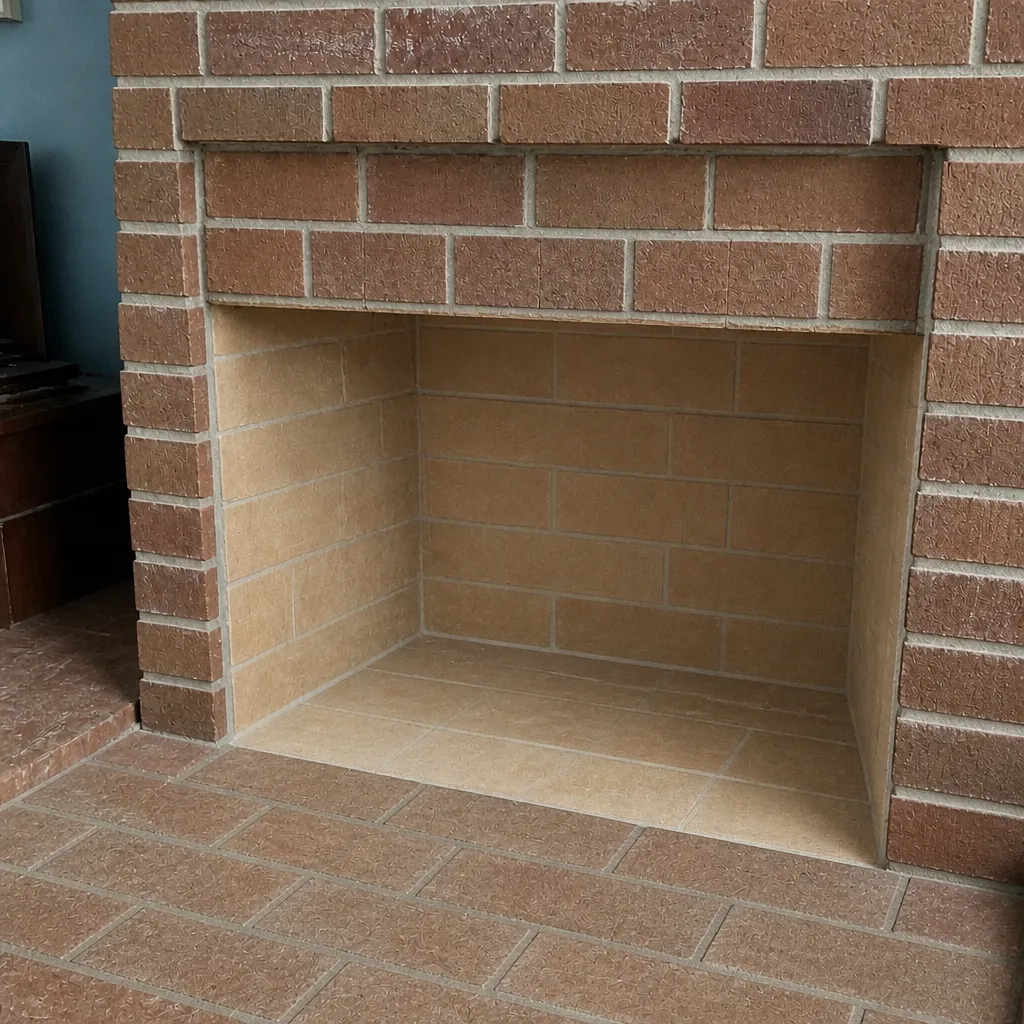 After
 Before
 After
 Before
 After
Common Mistakes to Avoid
- Skipping a permit on a reline because “it’s just a liner tube.” A liner is a system change subject to code, and an unpermitted reline can become a problem in a sale or an insurance claim. Pull the permit.
- Assuming a sweep visit and a real-estate inspection are interchangeable. They aren’t. If you’re buying or selling, ask for a Level 2 explicitly and ask for the video and written report.
- Treating the crown as cosmetic. In a wet, humid climate, a cracked crown is a water pathway into the chimney’s interior. It gets worse over a wet season, not better.
- Trusting a fresh coat of paint on a firebox. Firebox paint hides patched masonry and altered fireboxes. A permit record and an inspection report are what tell you what was actually done.
- Assuming homeowner’s insurance automatically covers the code-upgrade cost. It may not. Check the policy language on code compliance and unpermitted work before the loss, not after.
- Waiting until the first cold week to book. Every Tacoma homeowner has the same idea at the same time. The shoulder season before the burning season is the calmer window.
- Hiring a multi-trade contractor with a chimney on the schedule. Chimney work involves specific materials, specific code requirements, and specific inspection points. A good plumber is not a chimney specialist, and vice versa.
When to Call a Professional
Some conditions are clearly a call to a professional. A crack in the firebox masonry, visible damage to the chimney crown or cap, a strong creosote smell in the house, smoke coming back into the room, water stains near the chimney at the ceiling or in the attic, a chimney that’s never been inspected, or any chimney that’s been through a fire, a shake, or a storm event. If you’re buying or selling a Tacoma home and the chimney’s history is unknown, a Level 2 inspection belongs on the schedule. The safety reasons are specific and accurate: a chimney fire and carbon monoxide exposure are real risks, and the code requirements exist because those risks are real. We won’t scare-sell, and we won’t tell you the whole chimney has to be rebuilt if it doesn’t.
Tacoma Chimney Sweep offers free estimates in Tacoma with camera evidence you can see before any repair is recommended. Call (833) 513-8117. We answer 24/7. Fast dispatch from 7am to 7pm, Sunday through Friday.
Frequently Asked Questions
No. Routine chimney cleaning and sweeping are maintenance and do not require a City of Tacoma building permit. A permit enters the picture when work becomes construction, such as a liner replacement, a firebox or structural repair, or an appliance change. If you’re not sure which category a particular job falls into, call the City of Tacoma building department before the work starts. Call (833) 513-8117 for a free estimate on the work itself.
A Level 2 inspection is typically triggered by a real estate transaction, by any event that may have damaged the chimney (a chimney fire, a building fire, a seismic event, a lightning strike, or severe weather), by a change of appliance or fuel, or by a Level 1 inspection that turns up something the accessible areas can’t resolve. A homeowner who’s never had the chimney inspected should treat that as a reason for a Level 2. Call (833) 513-8117 if you’re not sure which level your chimney needs.
Yes. A liner replacement or relining changes the flue system, and that falls under permit and inspection requirements. The permit is what documents that the liner material, the installation, and the clearances meet code. Unpermitted liner work can create a problem in a home sale and can affect how an insurance claim is handled. Call (833) 513-8117 for a free estimate on a reline and a clear explanation of the permit step.
The standard guidance is to have the chimney inspected once a year and swept when the inspection shows it needs it. If you burn wood regularly, an annual sweep is typical; heavier use may mean more frequent cleaning. Tacoma’s wet season also makes the annual inspection worthwhile for the crown and structure, independent of whatever’s happening inside the flue. Call (833) 513-8117 to book a sweep or an inspection.
It can. Policies vary from carrier to carrier, but many contain code compliance language, documentation requirements, and unpermitted work provisions that can affect how a chimney-related claim is handled. The exact effect depends on your carrier and your policy, so read the language and talk to your agent. The permit record and the inspection report are the documentation that works in your favor. Call (833) 513-8117 if you need an inspection report for your records.
Properties inside Tacoma city limits are typically permitted through the City of Tacoma building department; properties outside the city but inside Pierce County are typically permitted through Pierce County. Some projects fall under a different jurisdiction depending on the property, so confirm with the permit desk before scheduling. A straightforward job with a complete submittal usually moves faster than one that requires plan review. Call (833) 513-8117 and we’ll walk through the permit requirement for your scope.
The Bottom Line
Routine chimney cleaning in Tacoma doesn’t need a permit. Relining, firebox and structural repair, and appliance changes do, and that line is where the code and the paperwork begin. A Level 2 NFPA 211 inspection isn’t a permit, but it’s the documentation that covers a sale, an event, or an unknown chimney, and it’s the report your insurer and your buyer will want to see. Permits and inspections exist to confirm that the system venting smoke and carbon monoxide out of your home actually meets the code that’s designed to protect you. Keep the paper, get the inspection before the burning season, and don’t start permit work before the permit is issued. The full-cycle specialist, from the firebox to the crown, is the call that keeps the whole system in one pair of hands. Learn more about Tacoma Chimney Sweep and what a visit involves.
Call (833) 513-8117 for a free estimate. We answer 24/7. Fast dispatch from 7am to 7pm, Sunday through Friday.
Written by the team at Tacoma Chimney Sweep.