
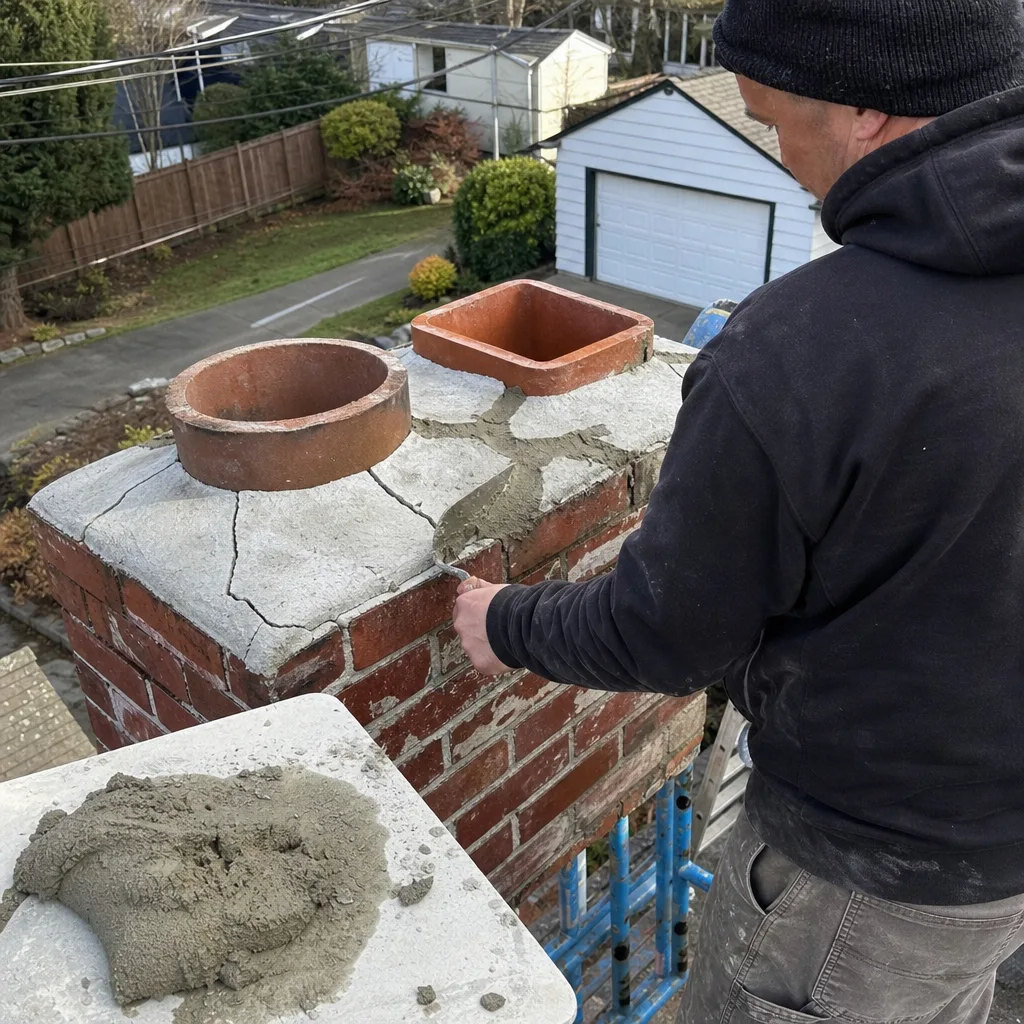
Last updated November 24, 2026
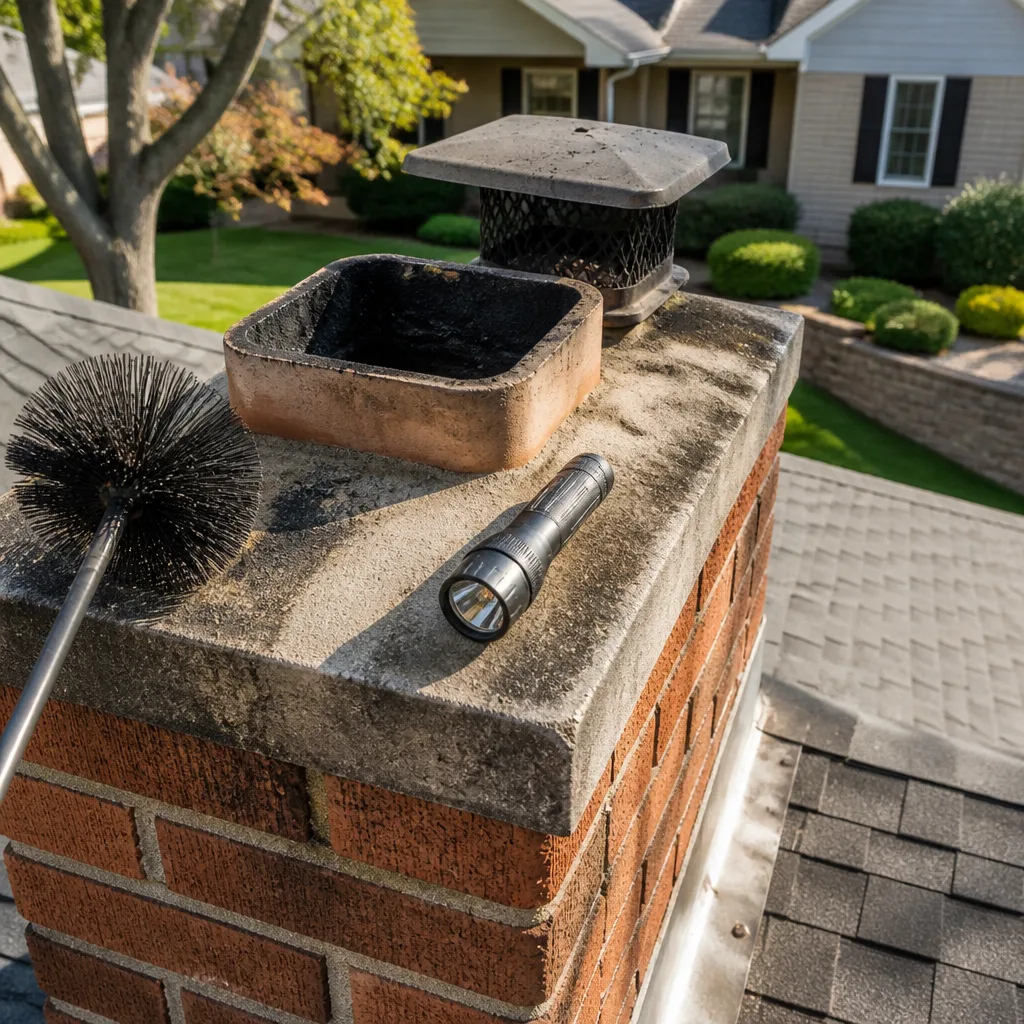 Sweep & inspection
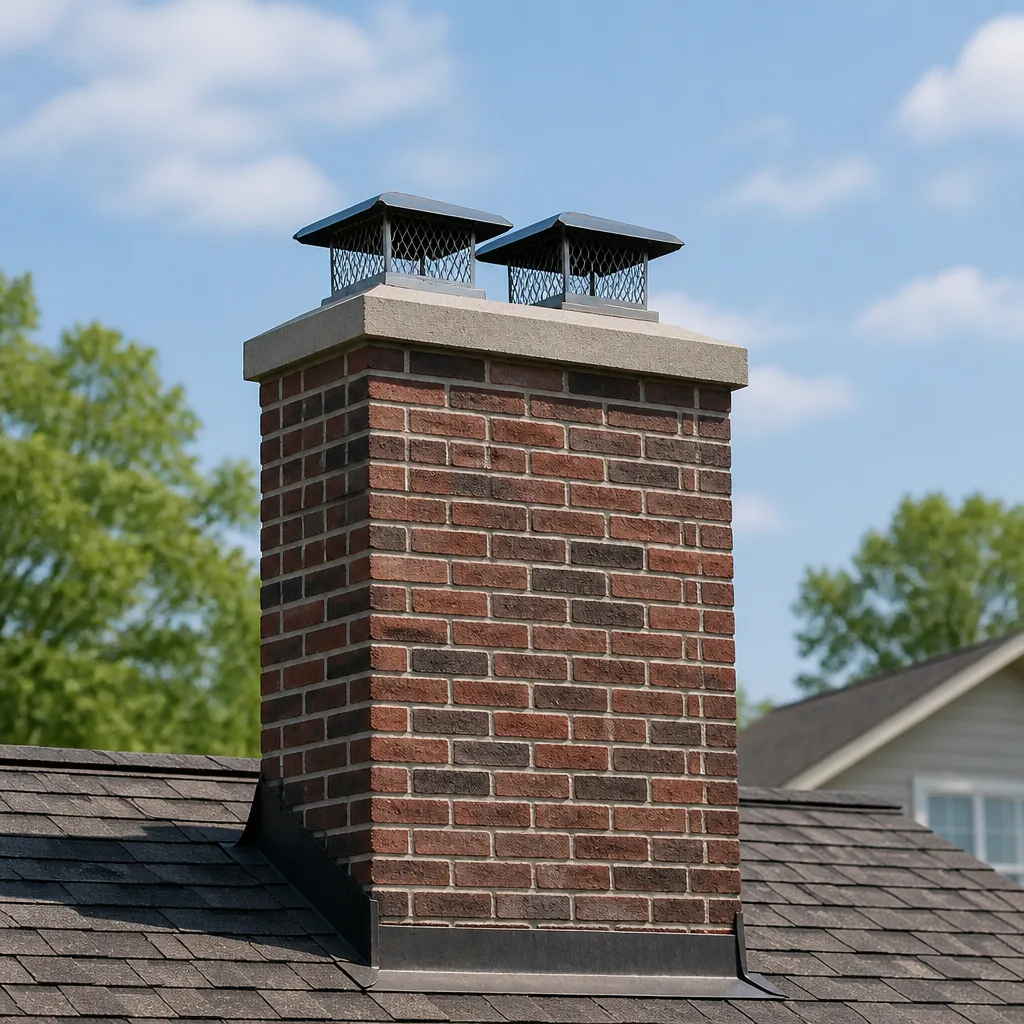 Caps & crowns
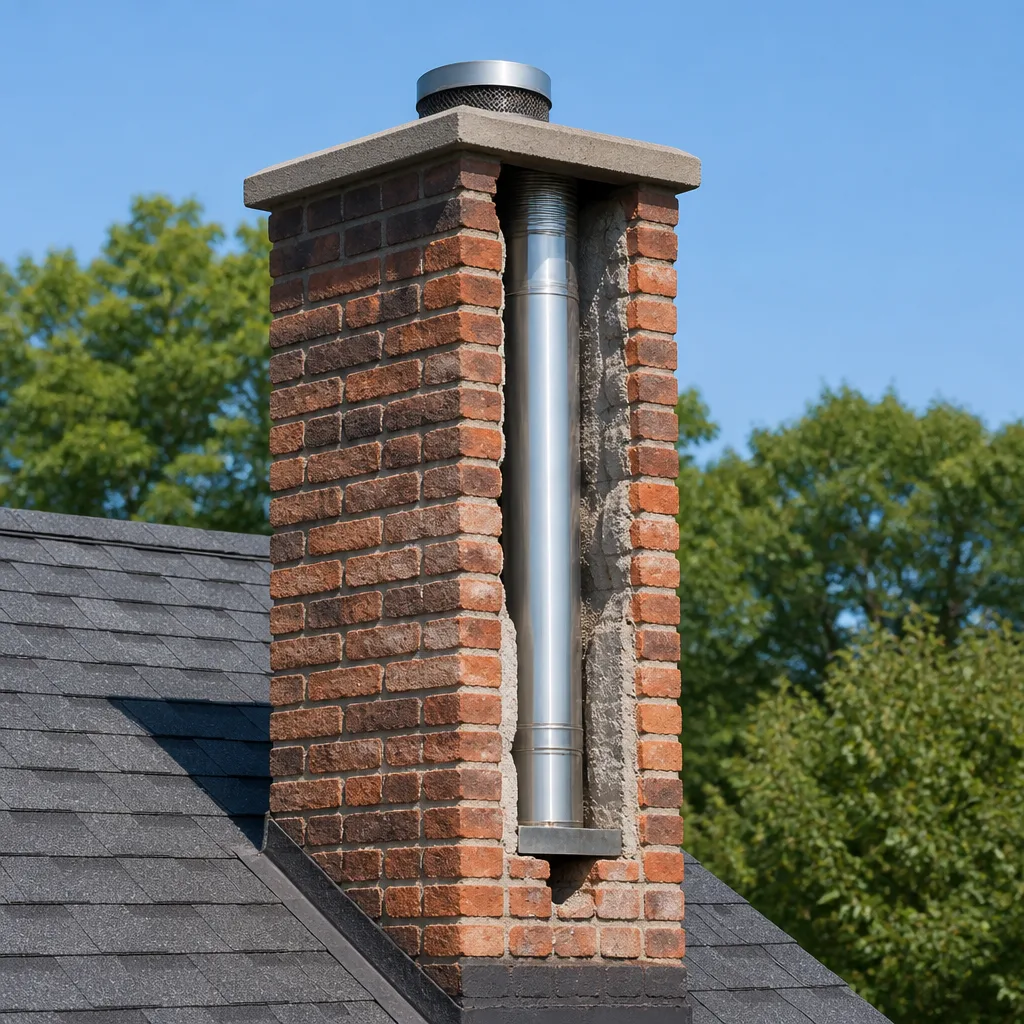 Flue relining
 Masonry repair
 Gas fireplace service
Level 1 sweep and inspection to the NFPA 211 annual standard - flue, crown, cap, and flashing checked and photographed
Chimney sweep logs do not sweep chimneys. They loosen some creosote - which then falls where a brush and vacuum still have to collect it.
Chimney Sweep Maintenance Checklist for Tacoma Homeowners
Most homeowners think a chimney checklist starts and ends with sweeping the flue. It doesn’t. The components that fail first on Tacoma homes – the crown, the flashing, and the sealed joints inside the smoke chamber – are the ones a brush never touches and a generic checklist never mentions. A cracked crown lets water into the masonry from above and rots a chimney from the inside out, and by the time you notice a problem indoors, the repair is structural rather than routine. This guide gives you a room-by-room, exterior-to-interior inspection sequence you can safely run yourself, the specific visual signs of crown and flashing failure that show up in Tacoma’s freeze-thaw climate, and clear guidance on which findings you monitor, which you photograph and document, and which mean calling a specialist before you light the next fire.
Quick Answer
A chimney maintenance checklist for a Tacoma home should cover the cap and crown, the flashing where the chimney meets the roof, the firebox and damper, the smoke chamber joints, the flue, and the appliance connection – checked on a schedule matched to your system type, not on a single annual date. The crown and flashing matter most here because winter freeze-thaw cycling and moss growth open small cracks that let water in, and water is what turns a small repair into a major one. Plan a professional sweep and inspection before the burning season, and use a homeowner’s visual pass in between to catch changes early.
Styles & brands we work with
- Sweep & inspection
- Caps & crowns
- Flue relining
- Masonry repair
- Gas fireplace service
Table of Contents
- Why Generic Chimney Checklists Miss the Real Failure Points
- The Exterior Checklist: Crown, Cap, and Flashing
- The Interior Checklist: Firebox to Flue
- What Tacoma’s Climate Does to a Chimney
- Maintenance Intervals by System Type
- Building a Chimney Maintenance Log
- What Your Findings Should Trigger
Why Generic Chimney Checklists Miss the Real Failure Points
The chimney checklists handed out at hardware stores and copied across the internet are organized around the flue. Sweep it, inspect it, done. That structure made sense when the concern was creosote buildup alone, and creosote still matters. But on houses in the Pacific Northwest, the failures we find most often start somewhere else entirely, and a checklist that ignores them gives a homeowner false confidence.
Three components deserve far more attention than they usually get:
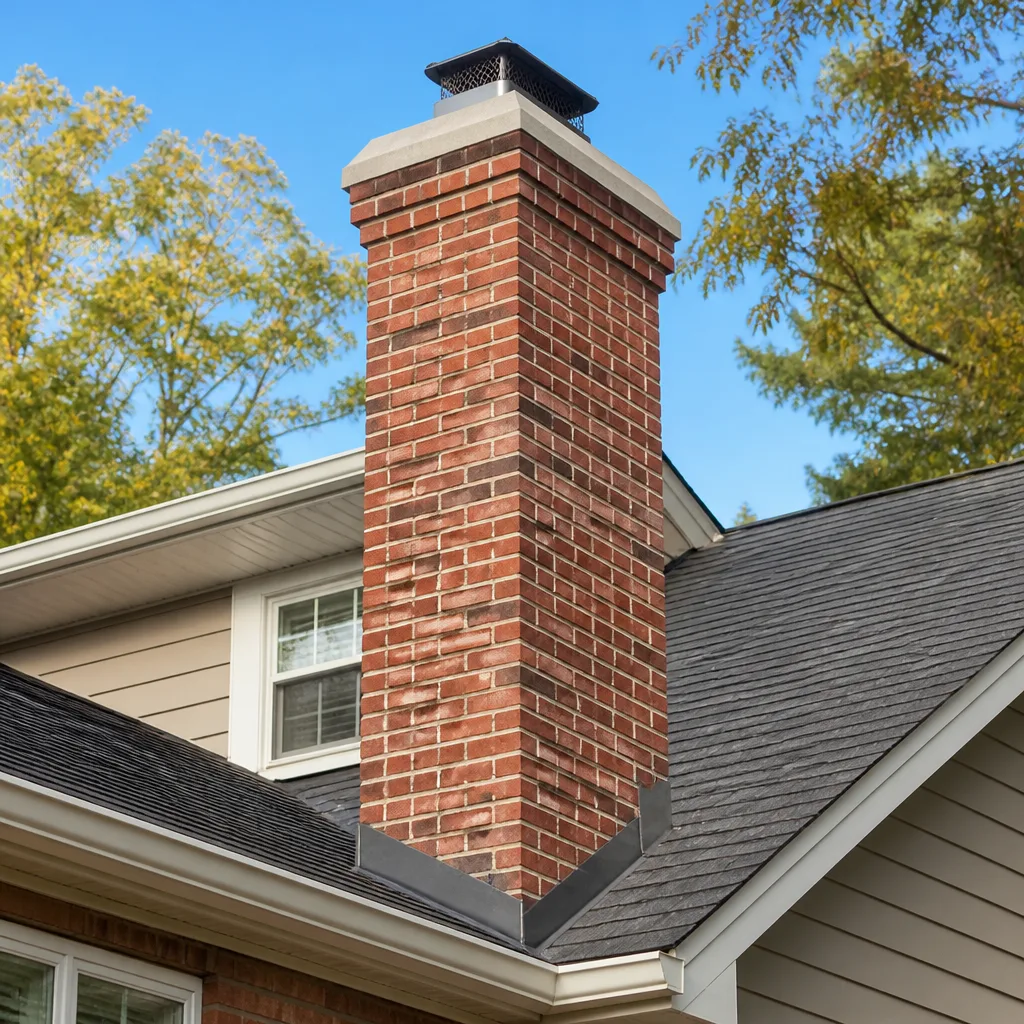
- The crown. The crown is the sloped concrete or masonry surface at the very top of the chimney that sheds water away from the flue opening. When it cracks, water runs into the chimney structure instead of off it. A cracked crown is the single leading entry point for water damage in a chimney, and it’s the item most homeowner checklists omit completely.
- The flashing. Flashing is the metal sealing the seam where the chimney passes through the roof. It’s a small area doing enormous work. When flashing pulls loose or its sealant fails, water tracks down the outside of the chimney and into the attic or ceiling, and it’s frequently misdiagnosed as a roof leak.
- The smoke chamber joints. The smoke chamber is the tapered space above the damper that funnels smoke into the flue. Its walls are built from corbelled masonry, and the joints between those courses erode over time. Rough, deteriorating joints collect creosote and can let combustion gases escape into the chimney structure. Most sweeps never look at it.
A checklist built around what actually fails is more useful than a longer checklist built around what’s easy to write down. That’s the difference between a maintenance routine and a ritual. For the flue itself, a professional chimney sweep remains the backbone of any schedule, but it’s one line item among several rather than the whole story.
The Exterior Checklist: Crown, Cap, and Flashing
Start on the outside, at ground level, and work your way up using binoculars. You should never climb onto a roof to perform a chimney inspection. Roof pitch, moss, and wet shingles make it one of the more dangerous surfaces a homeowner can step onto, and a fall from roof height is a serious injury. Binoculars, a camera with zoom, and a cautious eye from the ground are all you need for this pass.
- Look at the crown surface. From the ground, check the sloped top of the chimney for visible cracks, spiderweb patterns, or sections that look crumbled or eroded. Note any crack wider than a hairline – those are the ones worth photographing and reporting.
- Check the cap. A proper cap is a metal or masonry cover with mesh sides that keeps rain, animals, and debris out of the flue while letting smoke escape. Look for missing caps entirely, caps that are tilted or loose, and mesh that’s torn or clogged with soot or nesting material.
- Inspect the flashing seam. With binoculars, look at the base of the chimney where it meets the roof. You’re checking for lifted metal, gaps, missing sealant, or rust streaks running down the chimney sides. Rust streaking is a strong signal that water has been getting behind the flashing for a while.
- Scan the masonry for moss and algae. Green growth on the chimney’s exterior is common in Tacoma and it isn’t cosmetic. Moss holds moisture against the masonry, and the freeze-thaw cycle then works that moisture into small cracks.
- Look for spalling. Spalling is masonry that’s flaking, peeling, or breaking off in pieces. It’s often the visible end result of water that entered through the crown or flashing months or years earlier.
- Check for a missing or damaged rain cap on the flue. An open flue is an invitation for water, birds, and squirrels.
Our technicians have up to 14 years of experience and see these findings routinely, and a homeowner’s ground-level pass catches most of them early enough to act. Cap and crown work is squarely in the chimney cap & crown territory, and it’s worth knowing that most crown damage is repairable without rebuilding the whole chimney.
The Interior Checklist: Firebox to Flue
Move inside once the fire is fully out and the chimney is cool – a full day after the last burn, not a couple of hours. This is a visual check, not a cleaning session. Your goal is to note what’s changed since last year, not to remove soot.
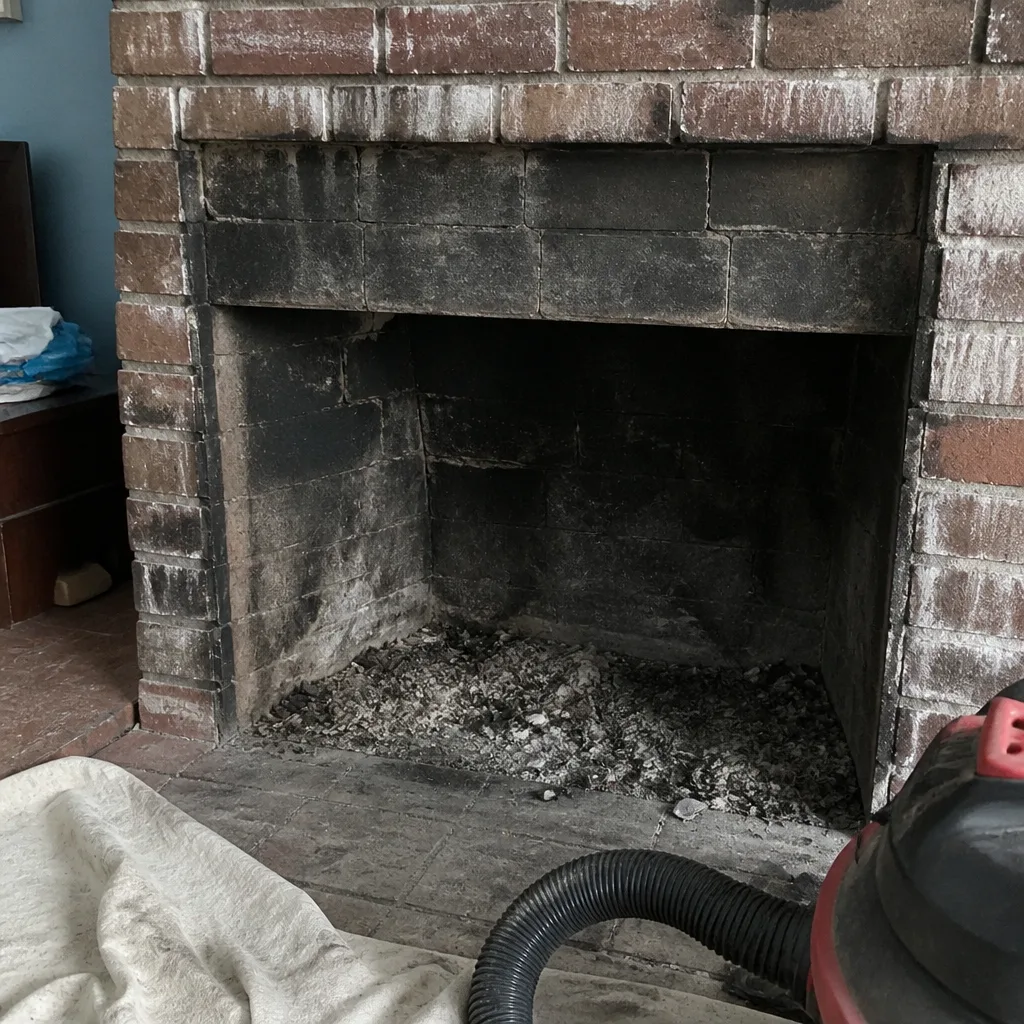
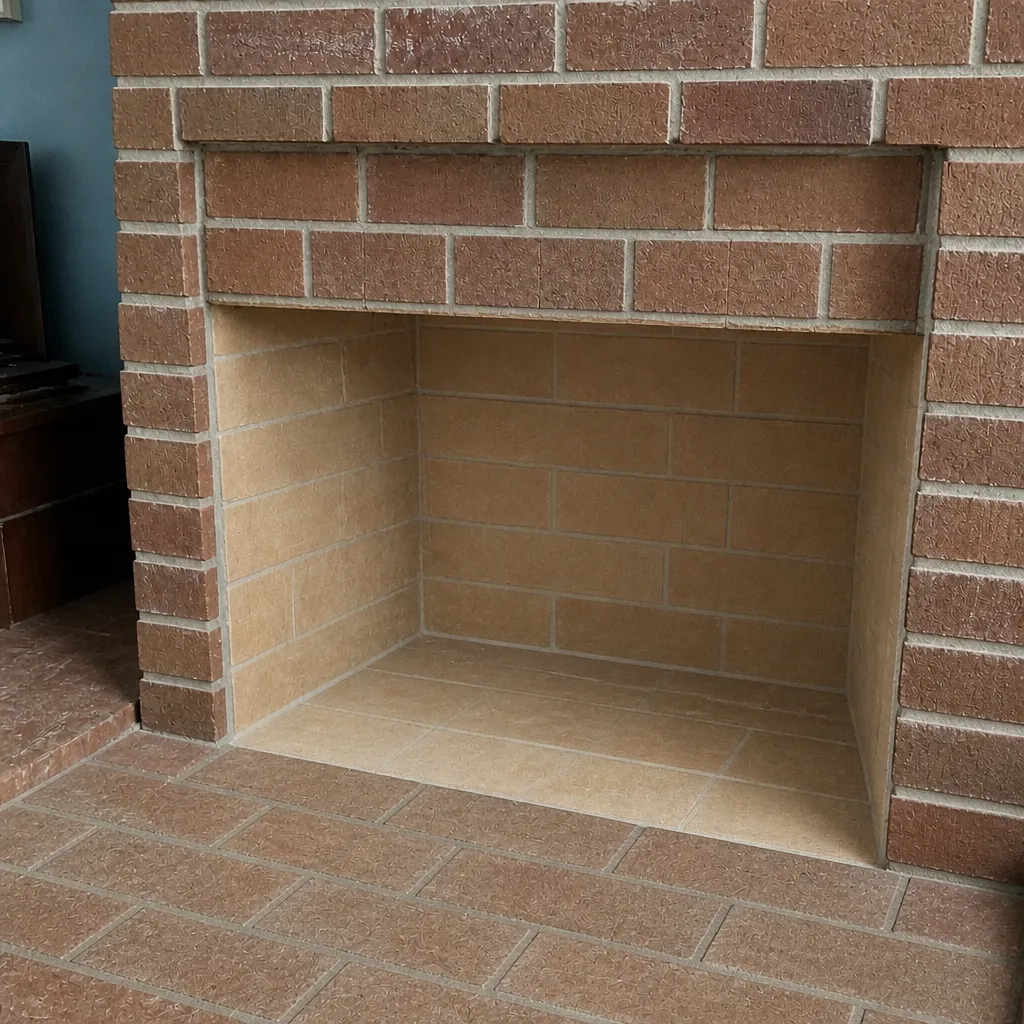
- The firebox. Look at the firebrick and mortar joints. Cracks, loose bricks, or missing mortar in the firebox are signs of heat damage and should be documented. Small cracks are common; gaps you can fit a coin into are not.
- The damper. Open and close it. It should move freely and seat correctly when closed. A damper that sticks open lets heated air escape up the chimney all winter, and one that won’t open fully is a smoke problem waiting to happen.
- The smoke chamber. Shine a flashlight up past the damper into the tapered chamber above. You’re looking for rough, crumbling joint surfaces. You can’t repair this yourself, but noting the condition tells a technician where to look first.
- The flue. From below, look up the flue for visible creosote buildup, especially glazed or shiny creosote, which is the harder and more flammable kind. Note whether you can see daylight at the top – no daylight usually means a blockage or a closed cap.
- The appliance connection. For a gas insert or wood stove, check the connector pipe and the seal where it meets the chimney. Any soot streaks on the outside of the pipe mean the seal is compromised.
- The room around the hearth. Check that clearances are maintained. Furniture, rugs, or storage pushed too close to the firebox is a fire hazard that gets overlooked because it grows back over time.
Interior findings around the firebox and damper are often candidates for fireplace repair rather than a simple sweep. Gas appliances deserve an extra note: if you smell gas or suspect a leak, stop and call a qualified professional immediately. Gas lines and gas appliance connections are not a homeowner inspection item.
What Tacoma’s Climate Does to a Chimney
Tacoma’s winters bring repeated cycles of freezing at night and thawing during the day. That pattern is harder on masonry than a long deep freeze would be, because each cycle lets water seep into a crack, freeze, expand, and widen the crack a little more. Over a handful of seasons, a hairline crack in a crown becomes a real opening.
This is why the Pacific Northwest produces a specific pattern of chimney wear:
- Crowns crack and erode faster than they do in climates with fewer freeze-thaw cycles, because water sits in surface cracks and repeatedly expands.
- Moss and algae establish on the chimney’s shaded faces, especially the north and east sides. They hold moisture against the masonry, which accelerates spalling and joint deterioration.
- Flashing sealant fails quietly. The constant wetting and drying, combined with the freeze-thaw cycle at the roof line, degrades sealant over a season or two, so flashing that looked fine last winter may already be lifting this one.
- Damp and slow-drying conditions mean creosote can sit longer on flue surfaces than it would in a drier climate, which makes regular sweeping matter more, not less.
Neighborhoods on Tacoma’s hillsides, where homes sit among mature trees and get less sun on the chimney’s faces, tend to see moss and moisture problems first. It’s worth a close look at your own chimney after the first cold snap of the year – that’s when new cracking shows most clearly.
Maintenance Intervals by System Type
“Get your chimney swept once a year” is the standard line, and for many wood-burning fireplaces it’s a reasonable starting point. But the right schedule depends on what’s burning and how. Here’s how we break it down:
- Wood-burning fireplace (open hearth): A professional sweep and inspection before the burning season each year, plus a homeowner’s visual pass midseason if you burn regularly. If you burn a lot of softwood or green wood, check more often – creosote builds faster.
- Wood stove (freestanding or insert): Annual sweeping plus a closer inspection of the connector pipe, which collects creosote quickly. Because wood stoves run hot and long, the gaskets and door seals deserve an annual look too.
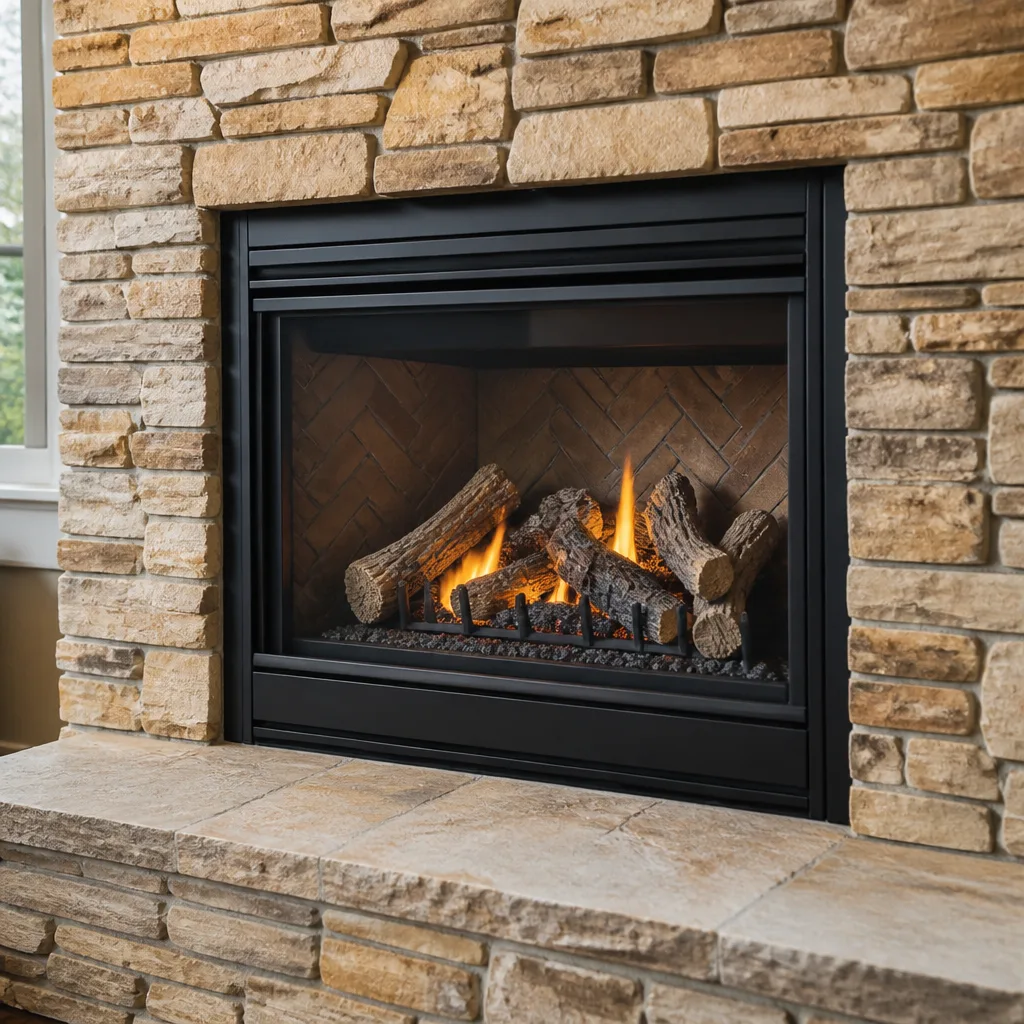
- Gas insert or gas fireplace: Gas systems don’t produce creosote, but they still need an annual inspection to check the venting, the glass, and the burner condition. Gas venting and gas connections are a professional-only item.
- Oil-fired appliance: Annual service on the appliance itself plus a close inspection of the flue, since oil flue deposits are a different animal from wood creosote and should be handled by a qualified technician.
Whatever system you have, the schedule should match your real burning habits. If you use the fireplace as ambiance a few times a month, an annual inspection is plenty. If it’s a primary heat source through the winter, that’s a real cadence of burning and it warrants a sweep before the season rather than after.
Building a Chimney Maintenance Log
A simple maintenance log pays off in two situations every homeowner eventually faces: selling the home, and an insurance claim. A chimney has a recorded history – when it was swept, what was found, what was repaired, and by whom – and having that history in one place answers buyer questions and claim questions without guesswork.
You don’t need software. A notebook kept with your home records works. Include:
- Date and type of service for every professional sweep, inspection, or repair. Note the company and record any written findings or photo reports.
- Your own visual notes from the homeowner passes – date each one, describe what you saw (crown condition, flashing, moss, creosote), and attach photos.
- Photos with context. Take the same angles each year so you can compare directly. A mid-December shot of the crown from the ground, and a flashlight shot into the smoke chamber, taken the same way every time, tell you more than a dozen random pictures.
- Repairs and product brands. If a repair was made, note what was used. Professional-grade materials like DuraFlex, HeatShield, Gelco, and Olympia Chimney are recognized lines, and knowing what’s already installed tells the next technician exactly what they’re working with.
- Any changes to the system – a new cap, a new damper, a replaced gas insert – so the record stays accurate.
If you’re buying a home in Tacoma, ask the seller for this log. If they can’t produce one, budget for a full inspection before you close – it’s the sort of thing that saves surprises later.
What Your Findings Should Trigger
The point of a checklist is a decision at the end of it. Not every finding needs a specialist, and treating them all as urgent will erode your attention to the ones that matter.
Monitor and photograph (no call needed): Surface moss on the outside that hasn’t yet caused spalling; the first appearance of a faint hairline on the crown; soot on the damper that’s cleaned at the next sweep. Take a photo, date it, log it, look again after the next cold snap or the next burn season, and watch for change.
Document and report at the next professional visit: Crown cracks you can see clearly; flashing that looks lifted or has rust streaks; smoke chamber joints that have gone rough; interior brick or mortar cracks around the firebox; any cap that’s loose or missing mesh. These are the findings that make the next inspection more useful, and they’re what a technician will want to see first.
Call a specialist before the next fire: Glazed creosote you can see in the flue; any visible damage to the flue liner; a cap that’s come off entirely; flashing that’s clearly channeling water into the attic; a strong smoke smell inside the house when the fireplace isn’t burning; soot or creosote streaks on the outside of an appliance connector; and anything that looks like a problem with the smoke chamber or the flue joints. If you’re unsure which category a finding falls into, an inspection with photographic evidence settles it cleanly, and nothing should be recommended to you that a technician can’t show you on camera.
Common Mistakes to Avoid
- Only thinking about the flue. The crown, flashing, and smoke chamber are the components that fail first on many homes, yet most checklists only cover the sweep. Examine all of them, not just the flue.
- Skipping the pre-season inspection and doing it after. In Tacoma, the pre-season inspection catches freeze-thaw damage before the first fire, not after a problem shows up midwinter. Schedule before the burning season, not as a midseason reaction.
- Climbing onto the roof to look. Roof pitch, moss, and damp shingles are a serious hazard. Use binoculars and a camera from the ground, and leave roof-level work to a professional.
- Treating moss as cosmetic. Moss holds moisture against masonry, and in a freeze-thaw climate that moisture is what drives cracking and spalling. Brush off growth early and check the mortar underneath.
- Ignoring a crack at the flashing “because the roof was fine last year.” Flashing sealant fails quietly, and the first sign is often a stain inside. If water is getting behind the flashing, it will eventually show indoors.
- Assuming a gas fireplace means no maintenance. Gas appliances don’t make creosote, but they still need their venting and connections checked annually by a professional.
- Running an inspecting company that isn’t chimney-specific. A general contractor or a roofer filling a schedule gap won’t have the equipment to reach a smoke chamber joint or verify liner integrity. A chimney specialist, not a generalist, is who you want.
- Comparing on price alone. The lowest estimate is often the one with the least in scope. Ask what the inspection actually covers – camera view of the flue, smoke chamber, crown, flashing – and compare on scope before you compare on price.
See the difference
 Before
 After
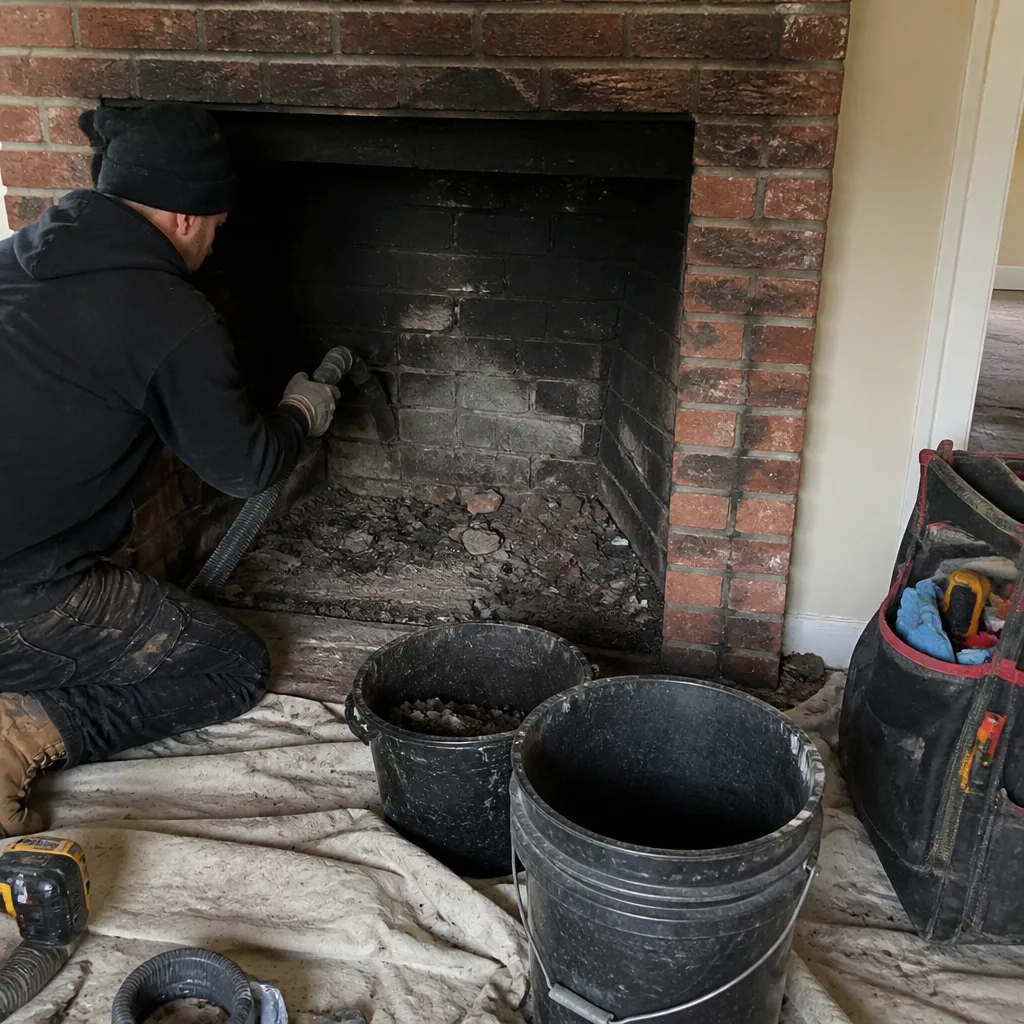 Before
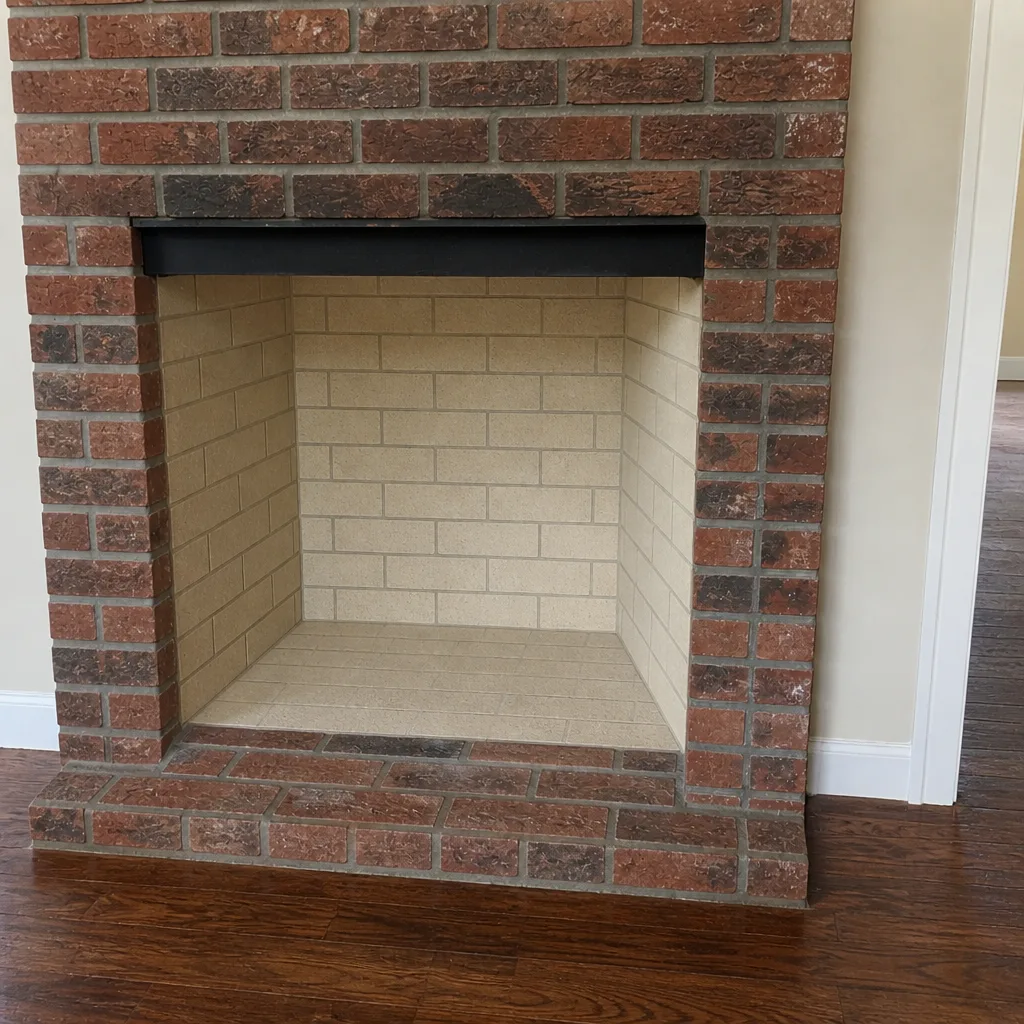 After
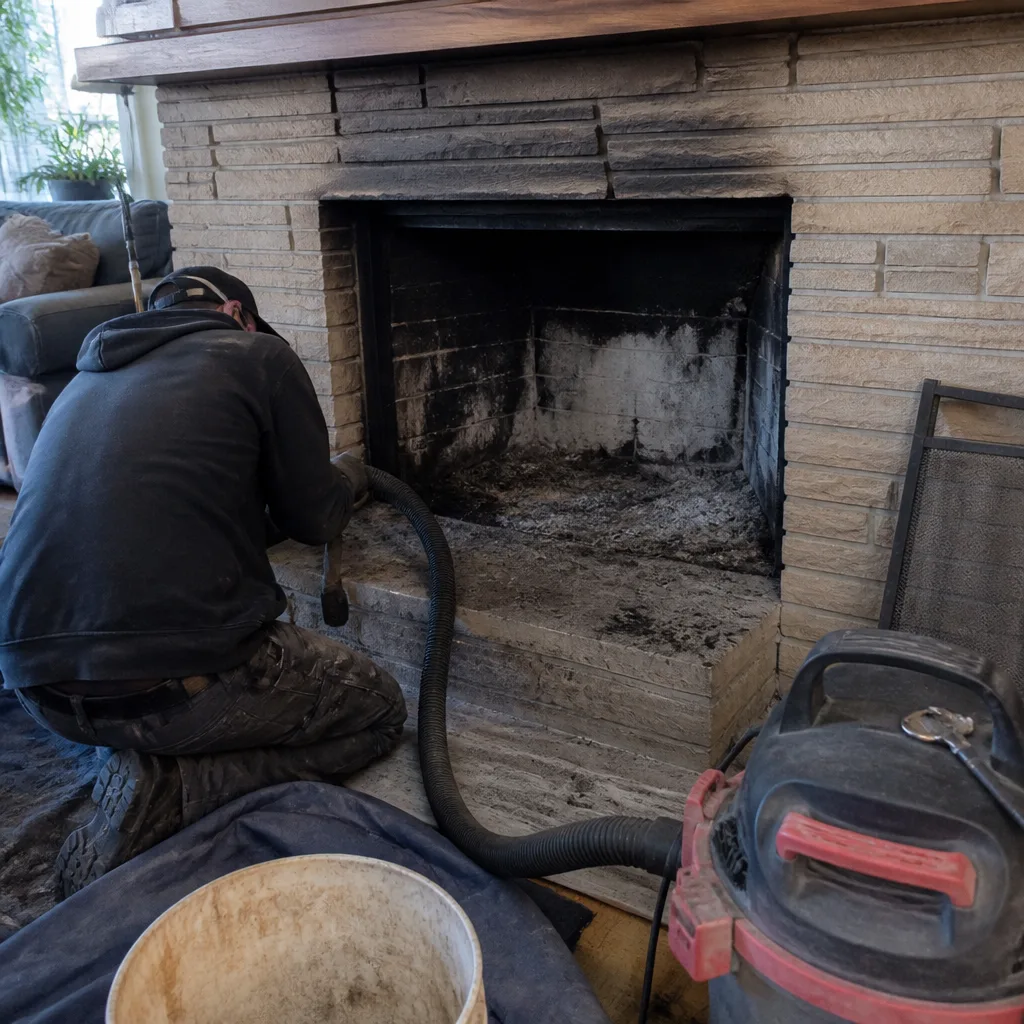 Before
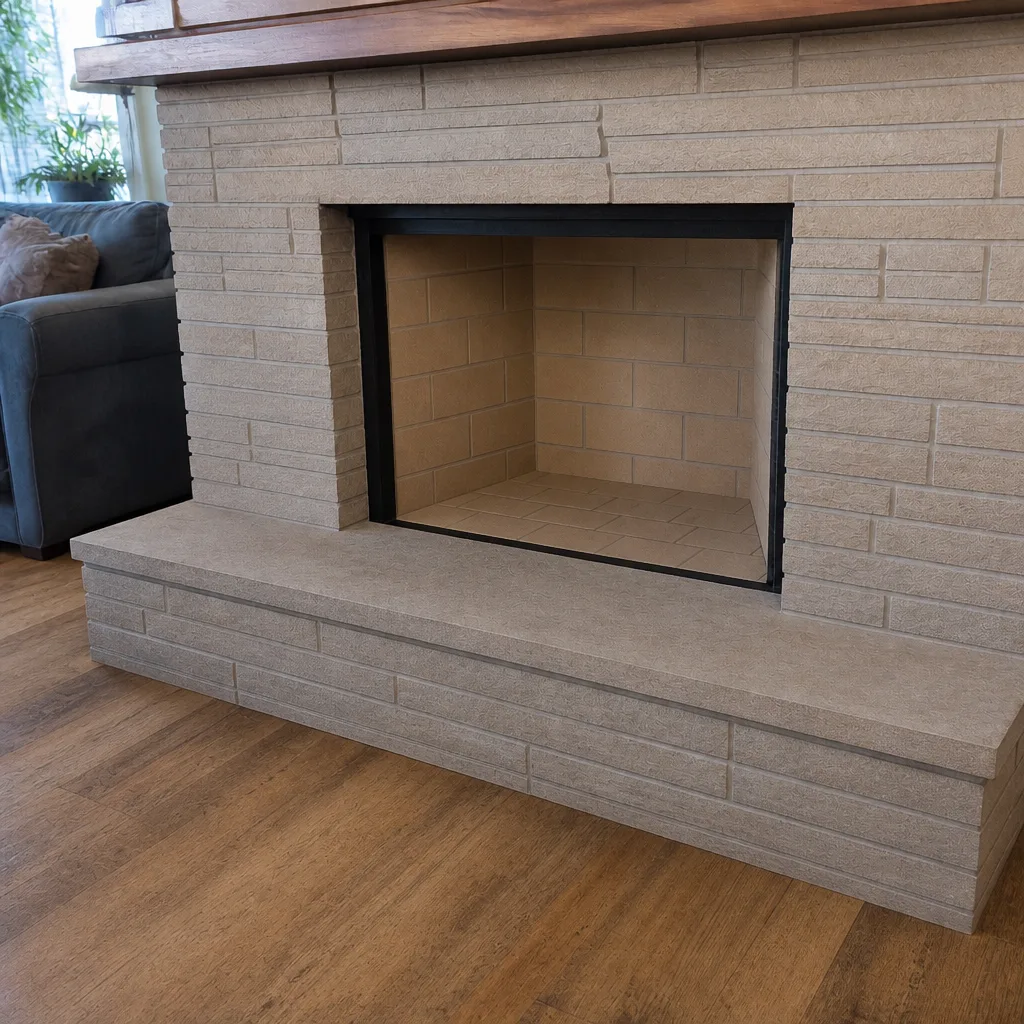 After
When to Call a Professional
Call a chimney specialist if you see glazed creosote, damaged or missing liner, a cap that’s come off, flashing that’s clearly leaking water into the attic, or any soot streaks on an appliance connector. Call before the next fire if you smell smoke indoors when nothing is burning. And call if a visual pass turns up something you can’t categorize – the point of a professional inspection is to look at it with a camera and a trained eye and tell you plainly what you’re looking at. At Tacoma Chimney Sweep, we connect homeowners with chimney specialists who do one thing and do it thoroughly: sweep, inspection, cap and crown, liner repair, and structural fireplace repair. Our technicians have up to 14 years of experience, and we work with recognized materials like DuraFlex, HeatShield, Gelco, and Olympia Chimney. Tacoma Chimney Sweep offers free estimates in Tacoma – call (833) 513-8117. We answer 24/7. Fast dispatch from 7am to 7pm, Sunday through Friday.
Frequently Asked Questions
For a wood-burning fireplace or stove, plan a professional sweep and inspection once a year, before the burning season. How much you burn matters – heavy burning, softwood, or green wood can justify a check up to twice a year. Gas and oil systems don’t produce creosote but still need annual inspection of their venting. For a precise recommendation on your system, call (833) 513-8117 – estimates are free.
Skipping maintenance lets small, cheap-to-fix problems – a hairline crack in the crown, a lifting flashing seam, a rough smoke chamber joint – turn into water damage and structural repair over a season or two. Creosote also accumulates in the flue, which raises the risk of a chimney fire. In this climate, the freeze-thaw cycle accelerates the damage. The safest pattern is the annual pass, not waiting until something shows.
Yes, and you should. A ground-level visual pass with binoculars and a flashlight can check the crown, cap, flashing, moss, and masonry exterior, and an interior pass after the fire is fully out can check the firebox, damper, and smoke chamber. What you shouldn’t do is climb a roof, open the flue to clean it yourself, inspect gas connections, or work on the liner. Call (833) 513-8117 for anything beyond a visual check.
The first sign of a failing crown is a visible crack or a spiderweb pattern in the concrete or masonry cap on top of the chimney, usually seen with binoculars from the ground. Left alone, water enters and damages the masonry below, showing up later as spalling or interior staining. A quick photo from the ground each year makes changes easy to spot – call (833) 513-8117 if you find one.
Yes. A gas fireplace doesn’t produce creosote, but it still needs an annual professional inspection of its venting, glass, and burner condition. Gas connections and venting are a professional-only item – never try to inspect or adjust them yourself. If you’re unsure whether your gas system has been inspected recently, call (833) 513-8117 – estimates are free.
Moss grows on chimneys that stay damp and shaded – common on Tacoma’s tree-heavy hillside neighborhoods, especially on the north and east faces of the chimney. It matters because moss holds moisture against the masonry, and the freeze-thaw cycle drives that moisture into cracks, speeding up spalling and joint damage. Brush off growth early and have the underlying mortar checked at your next inspection. Call (833) 513-8117 for an assessment.
The Bottom Line
The most useful chimney checklist is built around what actually fails on your system, not what’s easy to put on a list. On Tacoma homes, that means the crown, the flashing, and the smoke chamber joints get as much attention as the flue. Run a ground-level and interior visual pass each season, log what you find with dated photos, and match your professional sweep schedule to your burning habits. Monitor the small stuff, document what you’re unsure of, and call a chimney specialist before the next fire for anything involving glazed creosote, liner damage, or water getting in. A chimney specialist, not a generalist, keeps the whole system – from the firebox to the crown – on one schedule, and that’s how a chimney stays safe and code-compliant through the Tacoma winter. For a free estimate, call (833) 513-8117. We answer 24/7. Fast dispatch from 7am to 7pm, Sunday through Friday. See the full scope of what Tacoma Chimney Sweep covers.
Written by the team at Tacoma Chimney Sweep.